
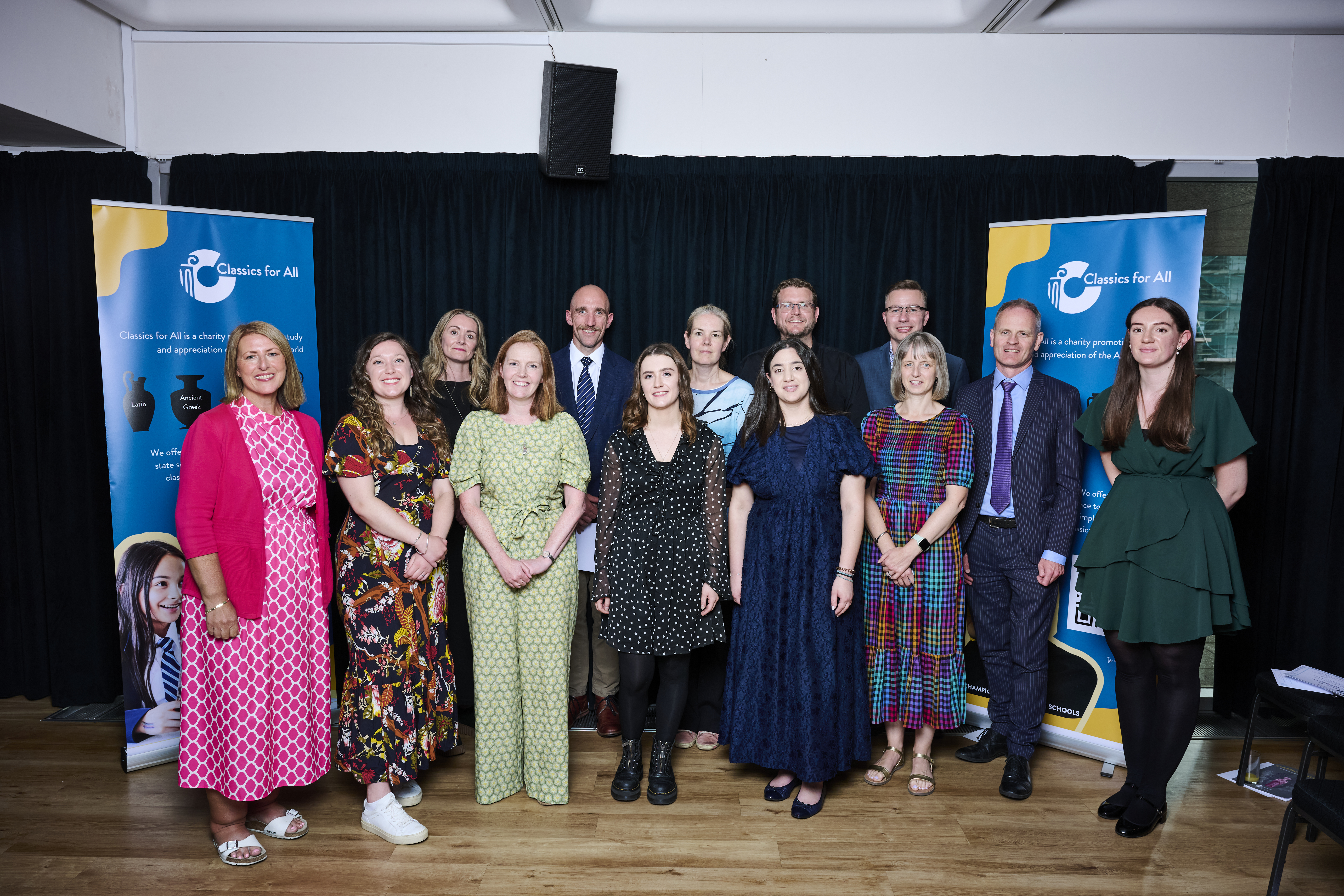
Our fifth annual teaching awards, the 'Impact Awards', this year took place at a special ceremony in Leeds Royal Armouries. We invited teachers, network coordinators and special guests to recognise the transformative work of some of our best and brightest teachers from across the country.
Special Awards
Primary School of the Year St Catherine's CE Primary School, Bolton
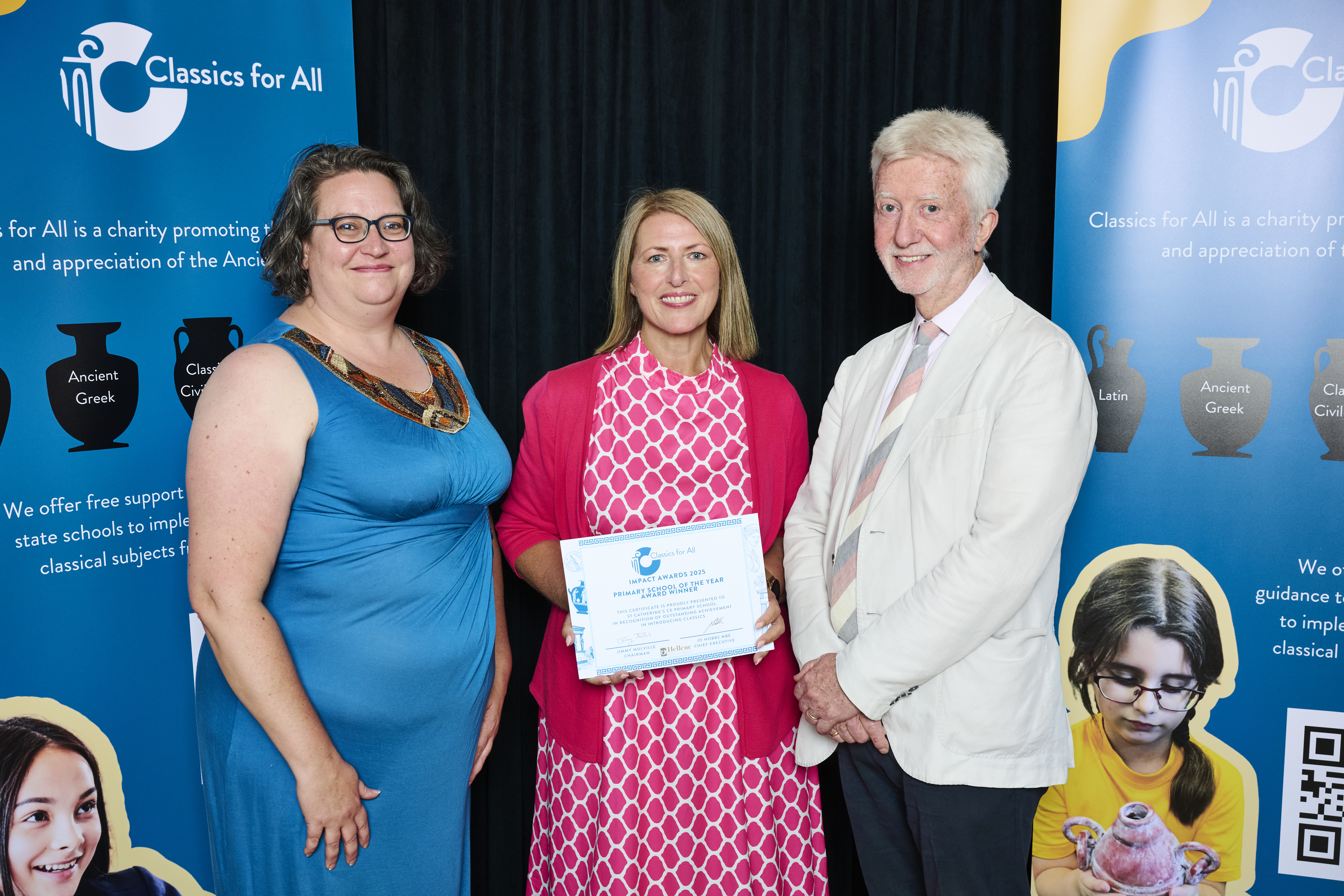
St Catherine’s is a small and inclusive school in Horwich, a former industrial town just north of Bolton. In an area of high deprivation the school caters to a wide range of pupils of different abilities and socio-economic backgrounds. In 2020 the teachers were trained by us to introduce Latin to help close the vocabulary gap between their ‘word poor’ and ‘word rich’ pupils. Since then, the school has been dedicated to teaching Latin, with one teacher learning Latin through the Cambridge Latin Course and creating a resource to support other primary teachers with the language.
The school has consistently gone above and beyond to ensure their pupils get the best out of Classics. They've incorporated classical myths into their assemblies, sing Latin songs like Gaudete at school performances, and run an annual school trip to Vindolanda.
Secondary School of the Year Acland Burghley School, Camden
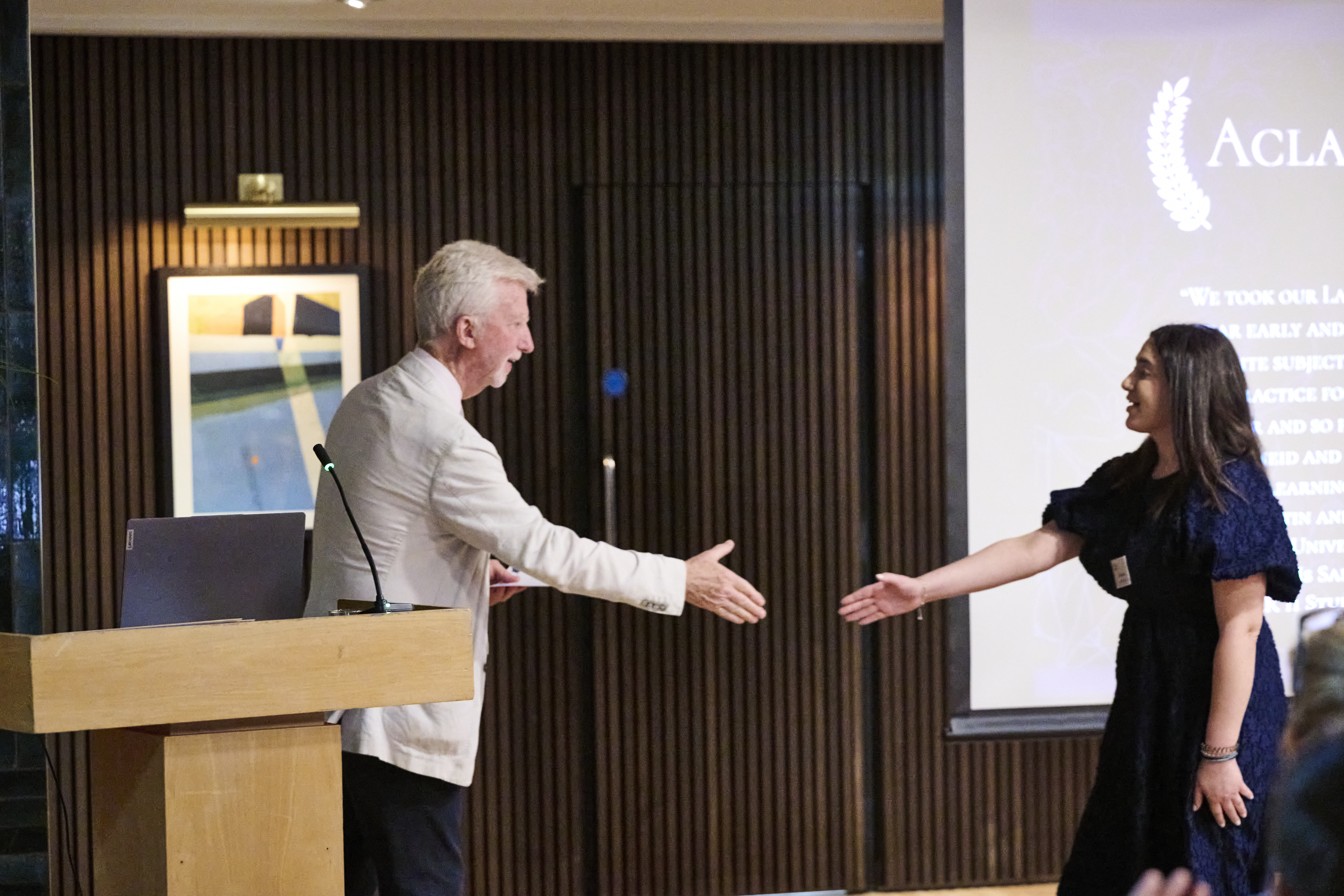
Acland Burley School serves a highly diverse community from a range of social, economic and ethnic backgrounds and supports many pupils with Special Educational Needs and neurodivergences.
In 2020, teacher Eleni Sanida introduced Latin as an after-school club to a small cohort of 15–20 pupils; now, just a few years later, all 400 Key Stage 3 (11–14) pupils can study Latin as part of their curriculum and can take it as a GCSE option in Year 10. Those same students can also take a fast-track Classical Civilisation GCSE in Year 11. Autistic students also study a tailored Latin and Classics curriculum that ensures everyone gets the opportunity to study the ancient world and that Classics is truly for all.
Sixth Form College of the Year Reigate College, Surrey
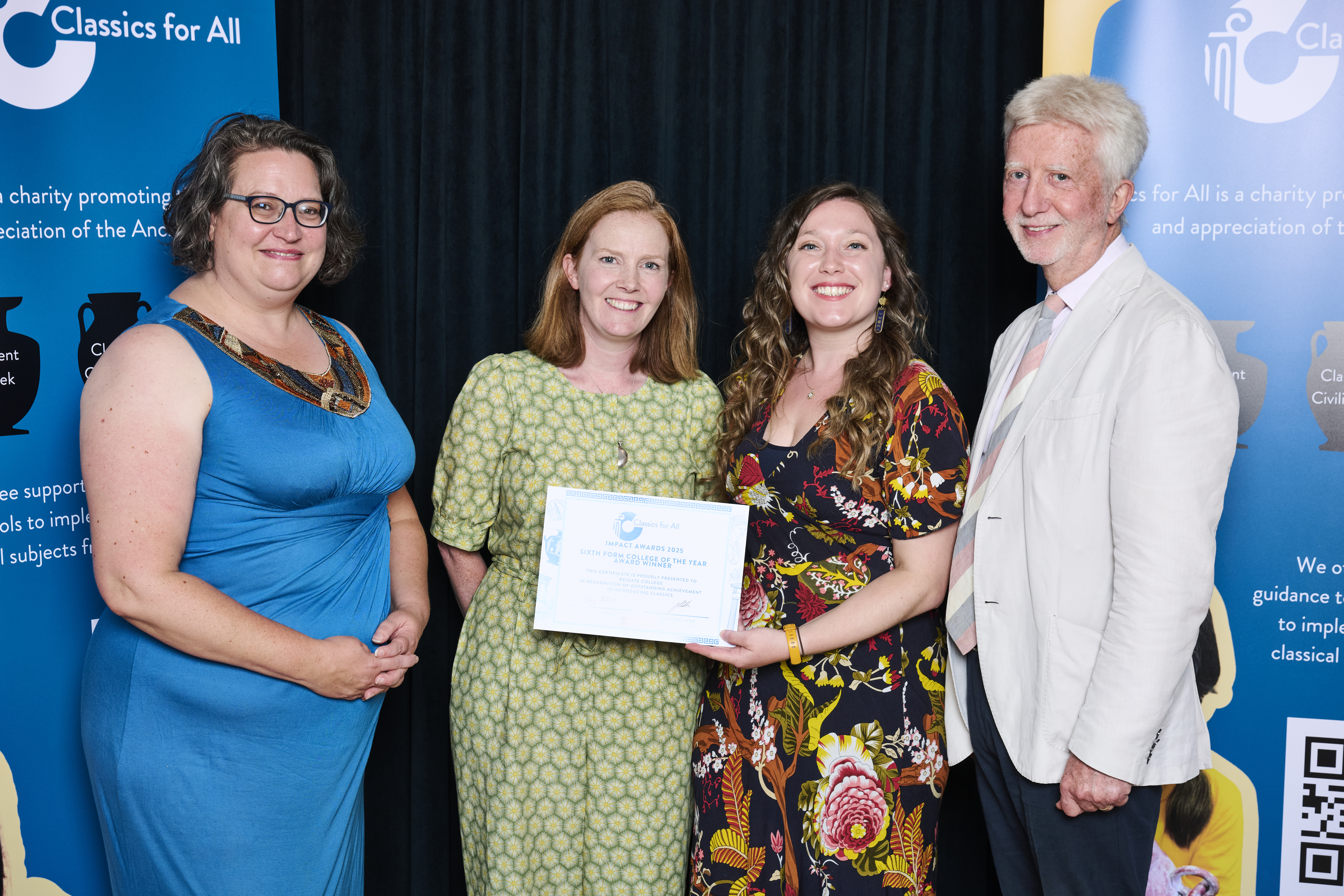
The state sixth form enrols students from a large geographical area, covering Surrey, West Sussex and south London. The college have had Classical Civilisation A Level as an option for more than a decade but in 2017, with our training and support, they introduced Latin and Ancient Greek as a Classics club.
They are now proud to be a sixth form with better attainment than local independent schools and one which regularly sends students to some of the top universities in the country. With a typical Classical Civilisation intake requiring three to four classes, each year at least 10 students go on to study Classics at university, this year including one student with an Oxford offer. As that student praised, ‘I love how supportive and encouraging the department is beyond the curriculum, they’re always ready to talk about any part of the Classical world – I don’t think I would have got my Oxford offer without them!’
Chris Pilcher Award Lauren Grattage, The Studio School, Liverpool
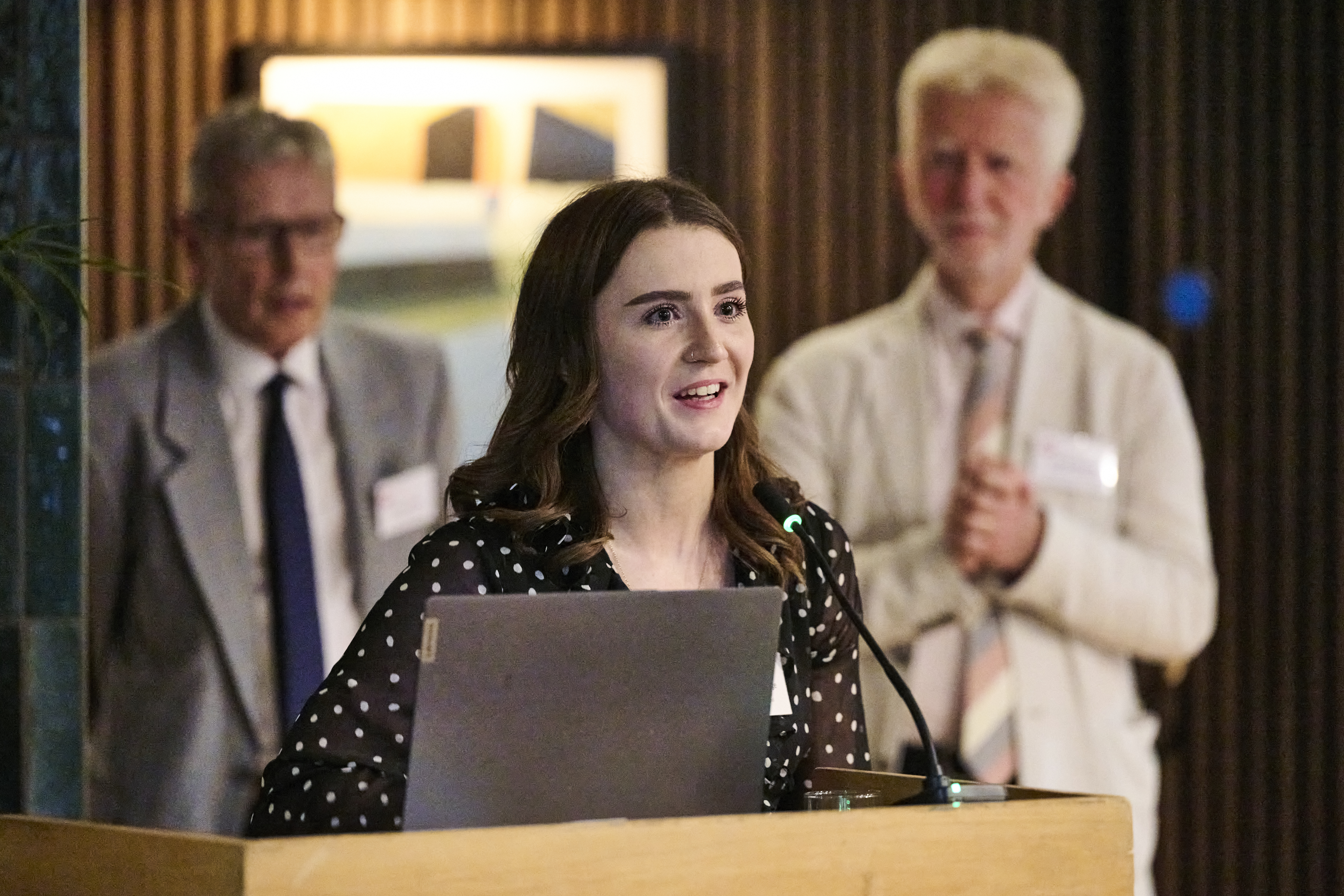
The Chris Pilcher Award was established in memory of Chris Pilcher, an enthusiastic and dedicated teacher at Sir Frederick Gibberd College in Harlow, Essex. In honour of his passionate work, this year's award was presented to our best 'up and coming teacher' in the UK.
Lauren Grattage is a humanities teacher at The Studio School in Liverpool. Hired to teach Geography and History, she initially thought to introduce some Classics into the existing History provision using our tailored resources. But after discussions and support from Senior Leadership, Lauren's plans moved to also introducing Classical Civilisation GCSE from scratch. In just one year she has not only introduced this at her own school but has also begun teaching the 'scholars programme' at another school in her school's trust. Twice a week she crosses Liverpool to teach Classics at North Liverpool Academy and will be supporting them on a trip to Rome next April. She has even taken up Latin classes to brush up on her Latin.
University Outreach Award The Open University
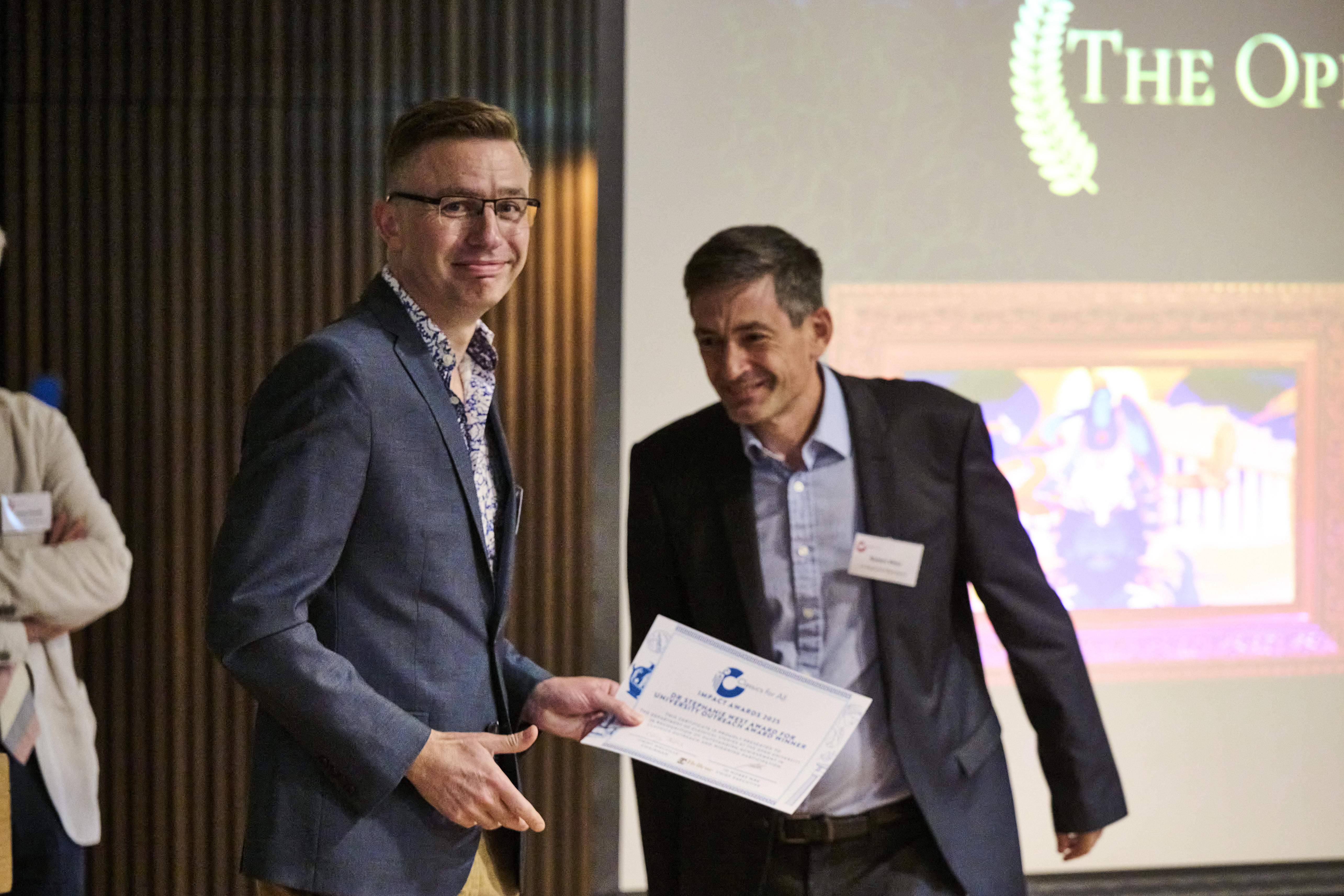
This year we introduced the Dr Stephanie West Award to celebrate the outstanding and innovative contributions to widening participation and outreach in the field of Classics. The Dr Stephanie West Award has been made possible through the generosity of Classicist Dr Stephanie West, who was a student at Oxford University and later researcher and lecturer there between 1958 and 2005.
Her award recognises the exceptional efforts of UK university Classics departments that are actively expanding access to classical subjects, breaking down barriers, and inspiring new and diverse audiences.
It was the sheer scale of the Open University's work that impressed us. Its courses on 'Introducing Ancient Greek' and 'Getting Started on Ancient Greek' attract more than 25,000 visitors a month; the 'Getting Started on Classical Latin' course has attracted 956,000 visitors and had 8,000 people earn their certificates of completion since its launch. Alongside these broad open courses, they have also provided (with support from the A. G. Leventis Foundation) 20 fully-funded Masters degrees to state school teachers to develop their subject knowledge and eight fully-funded Equality, Diversity and Inclusion bursaries for undergraduate degrees for teachers.
Its latest set of free courses, 'HeadStart Classical Studies', are designed for anyone interested in finding out more about ancient Greece and Rome. With no prior knowledge assumed, these short, interactive resources are designed to allow learners to get a head start with each topic and were designed with the 16–18 demographic in mind, both aiming to support their studies and encourage them to explore Classics before university. So far there are already more than 5,200 learners enrolled – a significant addition to the numbers of Classics enthusiasts in the world.
Regional Awards
Scotland St Ambrose High School
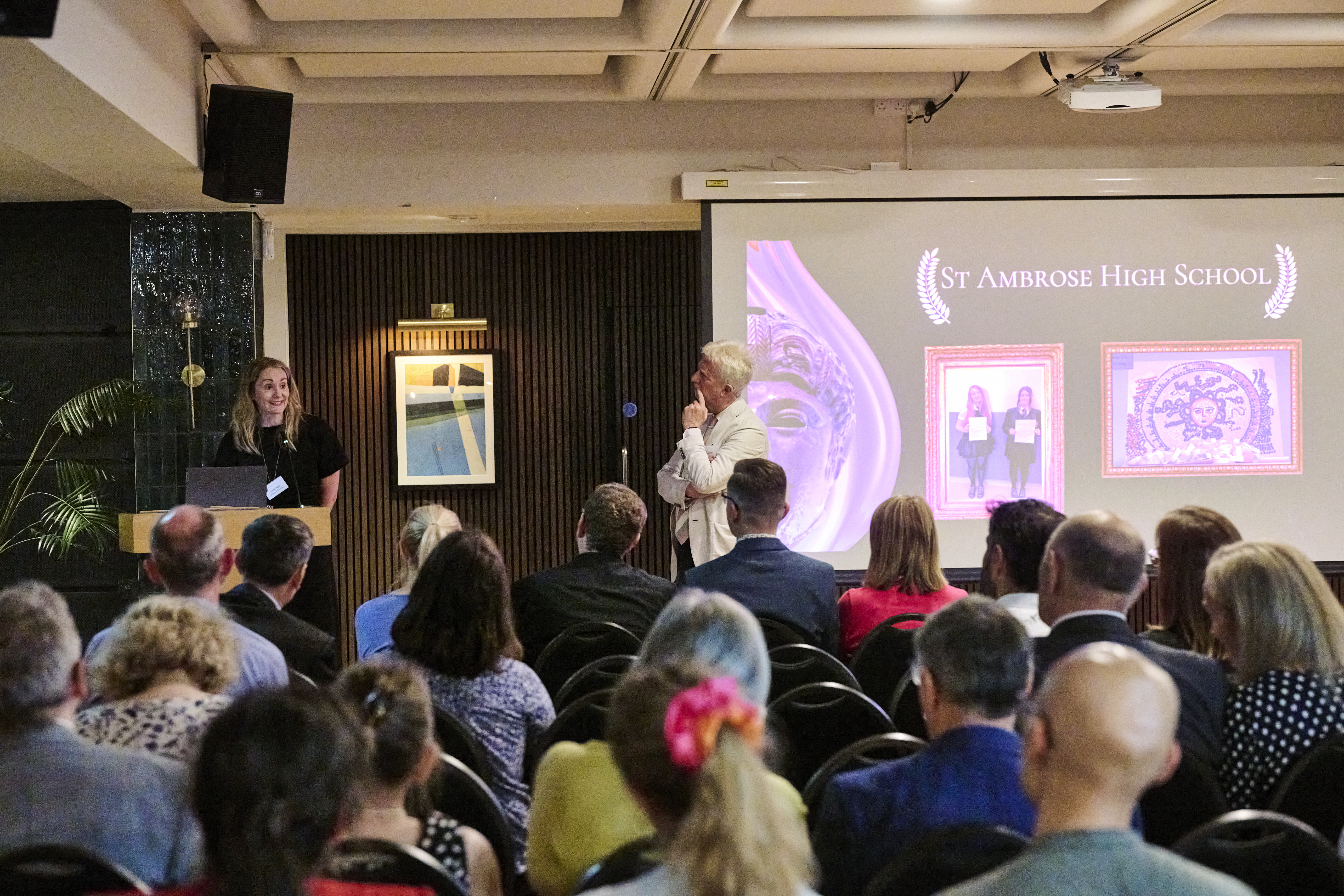
St Ambrose High School serves a broad range of communities in North Lanarkshire and the east of Glasgow, with more than half the pupils living in some of the most deprived areas in the country. In 2023, with our training, teacher Emma Noble achieved her General Teaching Council for Scotland (GTCS) accreditation required to be able to teach Classics on curriculum in Scotland. In just two years she has managed to take her school from zero Classics provision to providing teaching for every single one of the school's Secondary 1–2 pupils (ages 11–13) about the ancient world (an annual total of 542 pupils).
North East Hartside Primary Academy
Hartside Primary Academy is a small primary school in a former industrial town and one of the most deprived areas in County Durham, which introduced Latin for all their Year 3–6 pupils (ages 7–11) with our training and support. Now in its second year of Latin on the curriculum, the school has already become strong advocates of Classics in their local education scene. Headteacher Dawn Simpson and subject lead Tim Pratt work tirelessly to persuade the Chief Executives of their Academy Trust, with research and personal testament of their students, of the value of Latin more broadly.
North West All Saints CE Primary School
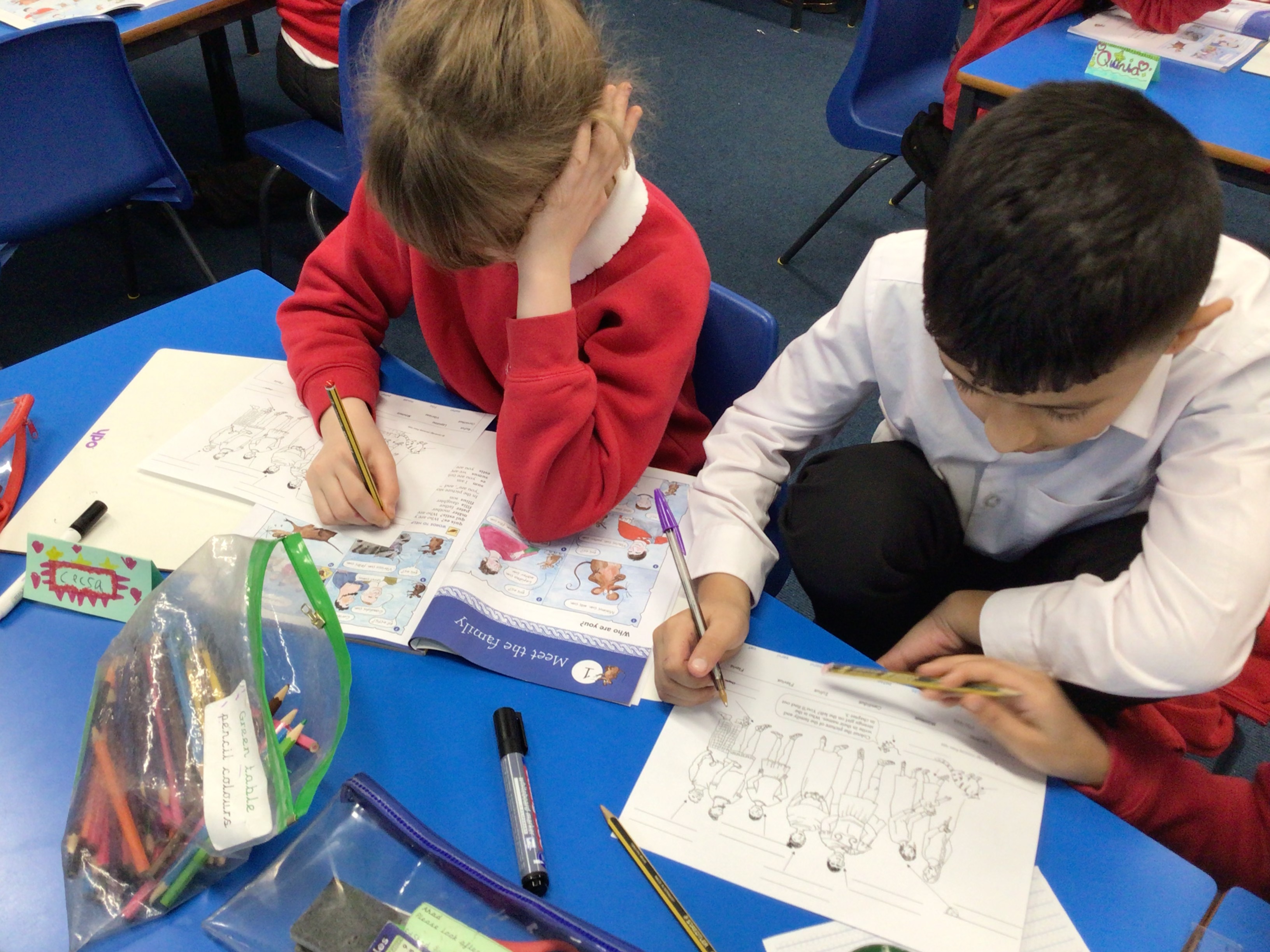
All Saints is a very diverse school where nearly 80% of their pupils speak another language at home. In 2023, teachers were trained by us to introduce Latin with an aim to support vocabulary and literacy to make sure all pupils, regardless of their language background, have the same skills and ability when they finish primary school.
Yorkshire and Humberside Holmfirth High School
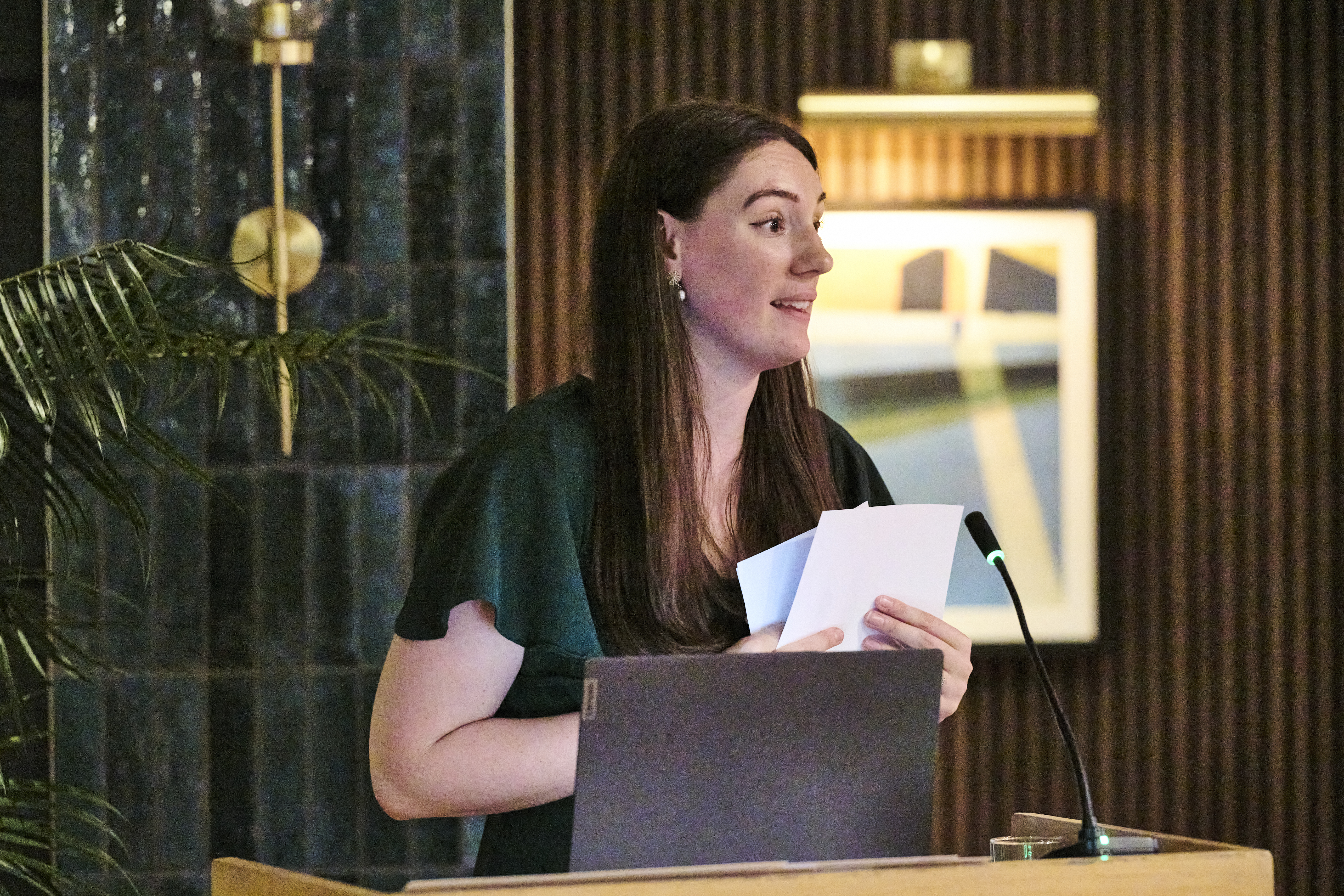
Holmfirth High School is a large secondary school which we have supported with an enormous range of Classics provision. Led by Caroline Davenport-Jones and her colleague Millie Knowles, the school has introduced an after-school Classics club four days a week, a lunchtime GCSE, a Latin Society and a Greek Society alongside introducing the Odyssey and Antigone into the English curriculum.
This September, GCSE Classical Civilisation is being added to the repertoire. Millie is also currently organising a Summer Event programme at the school, including Classics for All's Yorkshire and Humberside Network Coordinator Kate Williams who will teach the Greek alphabet, and best-selling author Caroline Lawrence to speak to students.
On top of all this, teachers have also organised the re-invigoration of the Leeds Classical Association which had fallen dormant, and which has recently held its first meeting for some years at Leeds University, with author Jennifer Saint as the inaugural event's speaker.
They are a testament to what a few passionate teachers can bring to the subject.
East Midlands Forest Fields Primary School
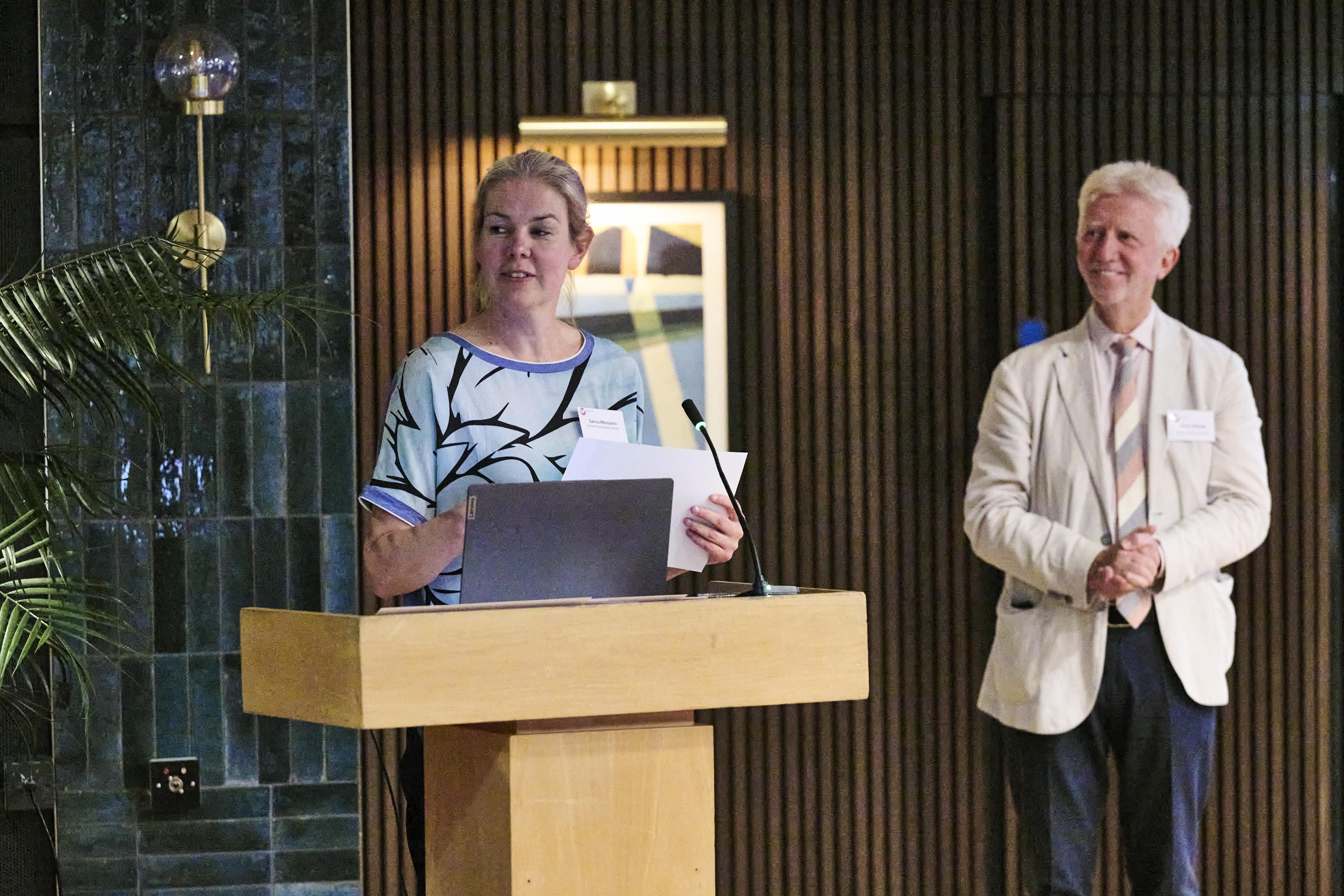
Forest Fields is a small school in an area of high deprivation, serving a diverse community with around 40 different languages spoken by its pupils. Led by teacher Sanna Menzano, the school has been steadily introducing etymology into the curriculum, particularly focusing on Latin and Greek word roots, alongside a focus on Greek mythology and classical stories.
Introducing etymology has supported pupils' language skills with a foundational understanding of how words are formulated and given them the curiosity to explore and investigate every aspect of a sentence. At the Impact Awards, Sanna spoke in particular about one of her pupils, a 10-year-old boy who had been disengaged from learning until she began teaching the Greek myths and etymology – which he absolutely fell in love with. She was struck that in one of her other lessons he raised his hand to ask the etymology of a word. Her anecdote reminds us what Classics can do for the hardest to reach, giving them a chance to truly engage with a subject and ignite their curiosity.
East of England St Joseph's and St Gregory's Primary School
St Joseph's and St Gregory's is a Catholic primary school with more than 300 students speaking 30+ different languages at home and from a wide range of backgrounds. A foundational language such as Latin was deemed key to supporting all its pupils, especially those with a low language starting point.
Teachers have found that incorporating Latin learning is an important part of creating a language-rich education and is an ideal foreign language choice for such a diverse community.
West Midlands The Rawlett School
Two passionate English teachers first came to us in 2017 for training to introduce an after-school Latin club for around 20 pupils; now, eight years down the line, there are 75 teachers who have received Classics for All training to teach Etymology and Latin to every single Year 7 pupil. This year the school has also begun to offer Latin as a GCSE.
The transformation of Latin from a small cohort extra-curricular offer to a timetabled lesson for everyone is a testament to the passion and perseverance of teachers at The Rawlett School.
Wales Ysgol Aberconwy
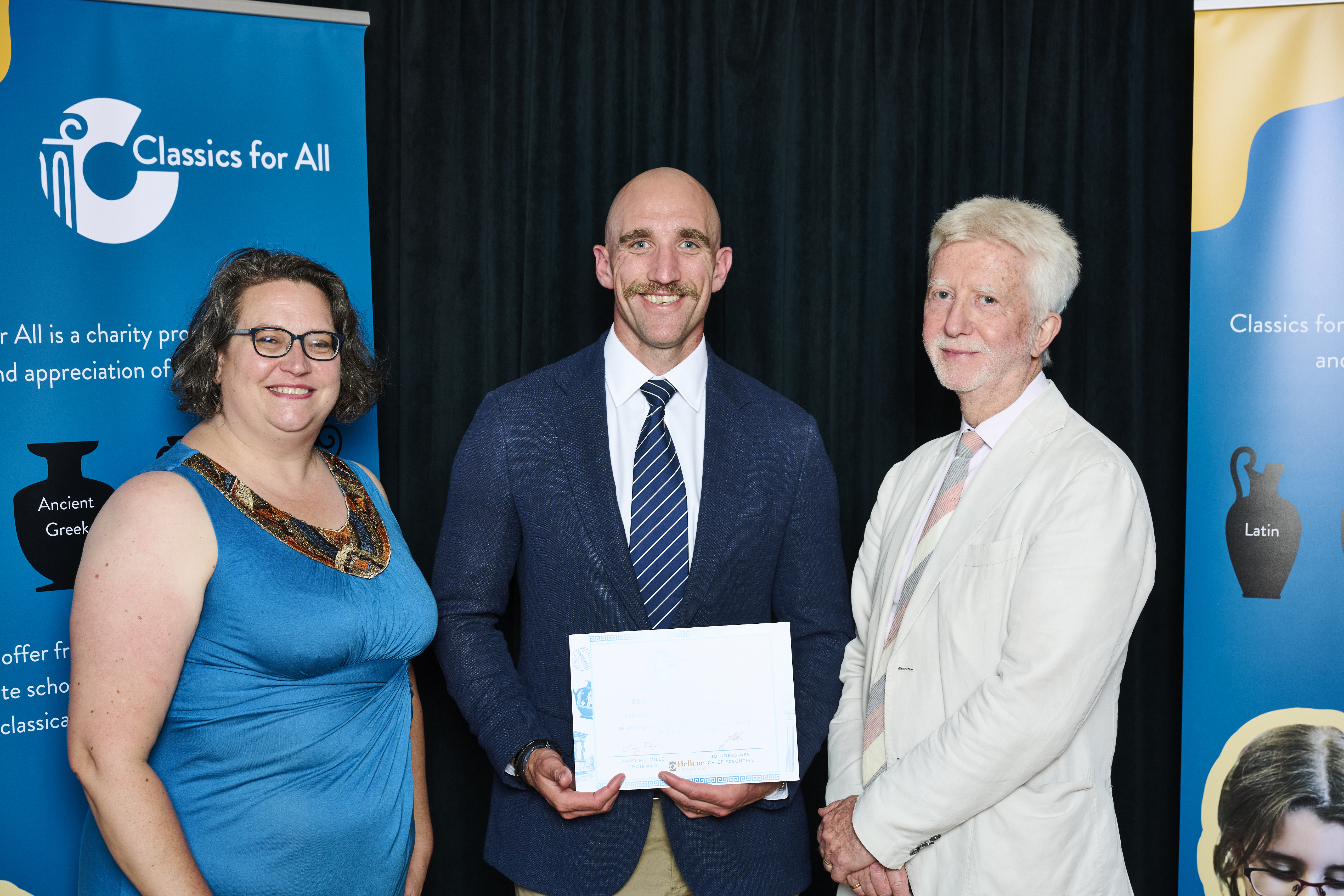
Ysgol Aberconwy has a mixed demographic of pupils from Llandudno and surrounding rural and coastal areas. With our support, teacher David Joliffe, who studied Classics at school and university, introduced GCSE Ancient History three years ago and this year has begun teaching A Level Ancient History.
In Wales, where schools are expected to prioritise qualifications offered by the Welsh exam board (which currently doesn’t offer Ancient History or Classical Civilisation), introducing examination level Classics can be a challenge. David's work ensuring his students have the opportunity to study Ancient History is especially important considering the national picture.
South West Truro and Penwith College
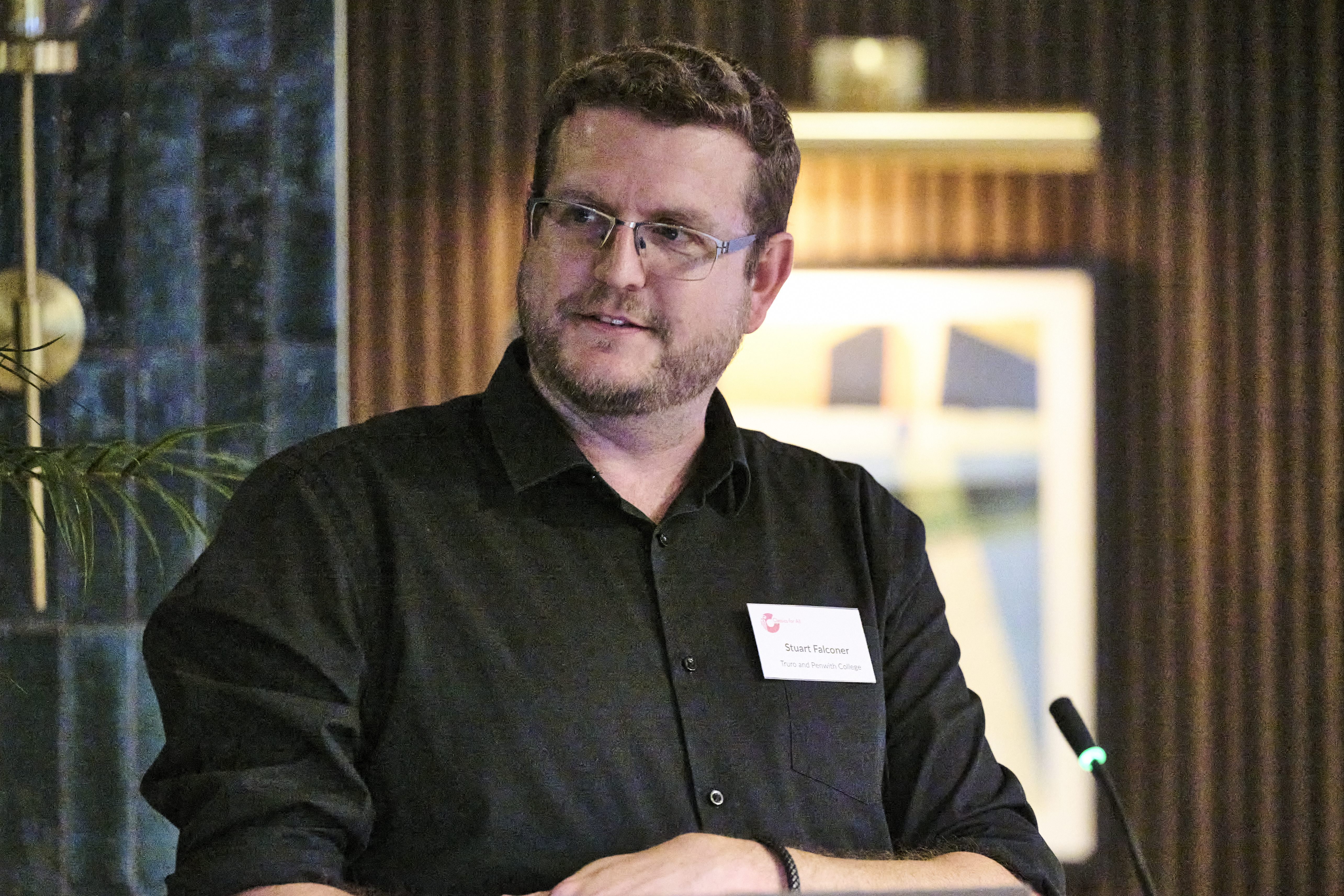
Truro and Penwith College has a history of a thriving Classics department. Stuart Falconer teaches more than 80 students A Level Classical Civilisation. Representing one of the larger UK providers of the subject, he has been involved in liaising with the Classical Association Education team on the Classical Civilisation Qualification Review. He also provides an incredible number of opportunities for his pupils outside the classroom: he arranges at least three guest speakers a year; he runs an Athens trip annually and every other year also arranges a trip to Rome; he actively encourages students to get involved in competitions from the Classical Association, Oxbridge, Bloomsbury and any others linked to the classical world. He has had winners write songs, poems and essays, with at least one winner every year for the last three years; and he signposts students to placement and summer school opportunities.
Beyond his own classes he supports local schools to encourage students to consider Classical Civilisation as a subject at Further Education level. He has created a Roman loans box which he uses to offer tasters to Year 9, 10 and 11 students around the county. He also established the Cornwall Young Archaeologist Club branch last year to encourage students to get involved in the archaeological world, too.
South East St Thomas More Catholic Primary School
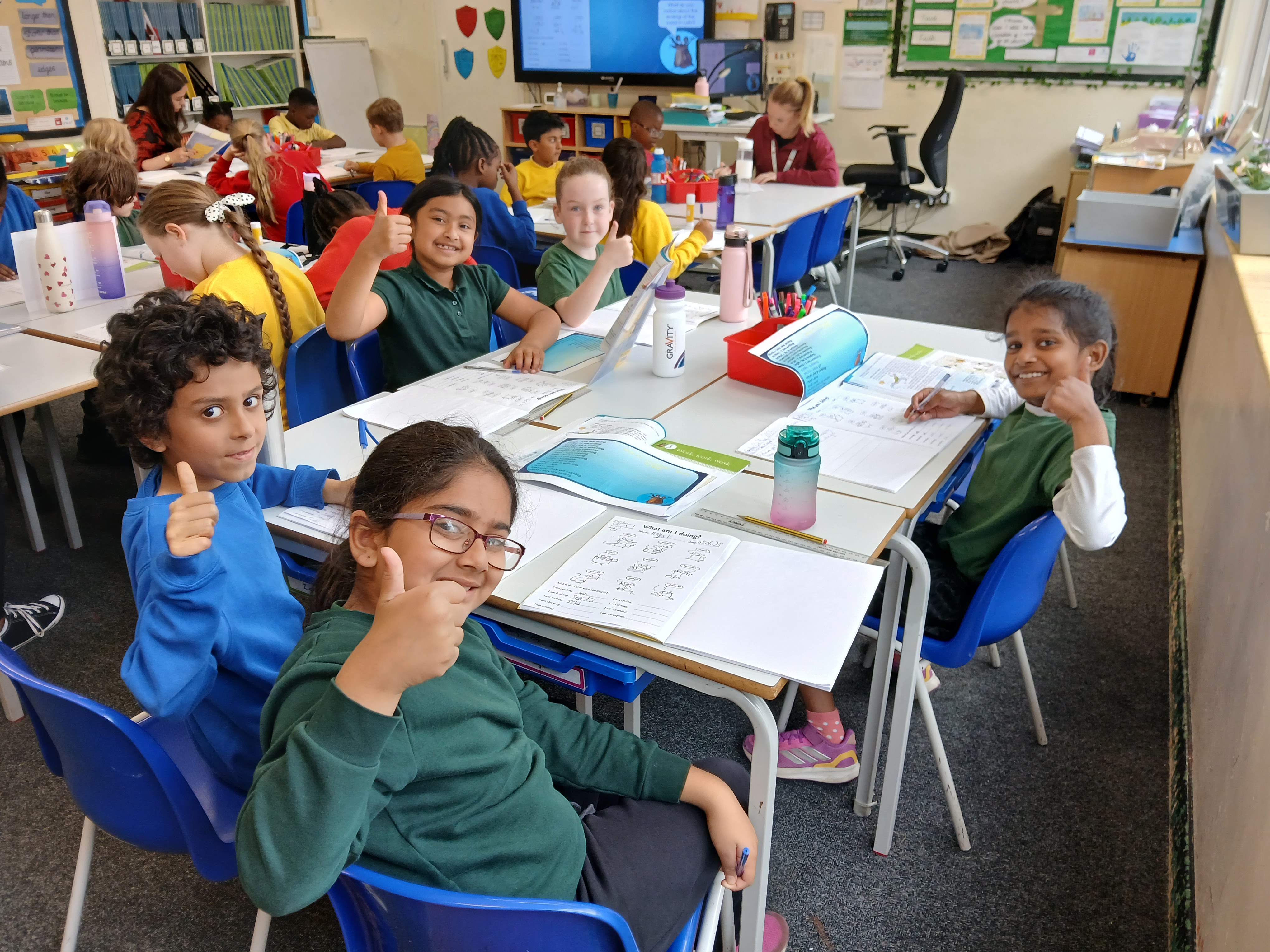
St Thomas More Catholic Primary School introduced Latin two years ago with training and support from us. Alongside Latin language lessons, the school incorporates Latin in the context of church and prayers.
The school was recently visited by their local Network Coordinator who was very impressed by the extent to which the school showed enthusiasm for the subject, which was echoed by all the pupils she met.