
With the festive season approaching, wrap up warm and enjoy the third installment of our new bi-monthly newsletters. We’ll be keeping you updated on our latest work, upcoming events and new finds in the classical world.
You can sign up to receive all our latest e-news here.
Meet our new network coordinators
Yorkshire and Humberside: Dr Maria Haley
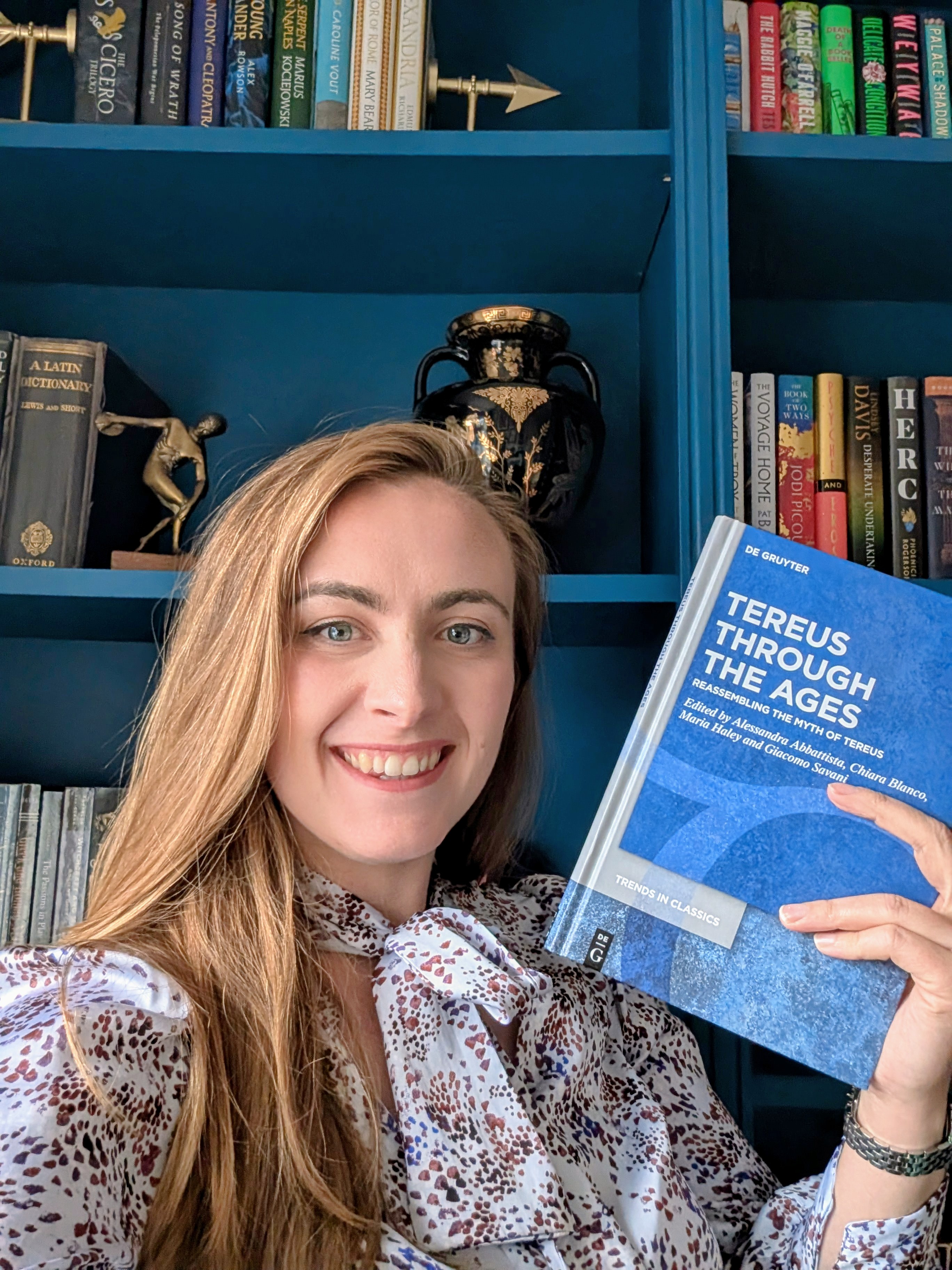
Mariah has a PhD in Ancient Tragedy and taught at the Universities of
Manchester and Leeds. Afterwards, she taught Latin from Key Stage 3–5 and Classical Civilization from Key Stage 4–5 as Subject Lead, offering Greek as an extra-curricular club. She also presents on the YouTube channel Millennial Classicist, offering videos to support Latin GCSE and Classical Civilisation A-Level.
She’s excited to re-join the Classics for All team, having worked with us during her time at the University of Manchester. Maria is looking forward to tailoring Classics to the needs of her schools, developing literacy initiatives, providing positive experience for pupils and teachers alike.
‘Having worked for Classics for All before undertaking teacher training, I know the charity takes innovative approaches to tailor Classics curricula to the needs of its schools, providing positive experience for pupils as well as fun and funded training for teachers!’
South East: Andie Allman
Andie completed her BA (Hons) and MA at Warwick University in classical subjects, followed by a PGCE in Classics and further study in Education at the University of Cambridge. As a qualified Classics teacher, she has taught classical subjects in state and independent schools for 14 years. Over her teaching career, she has worked as a Head of Department, introducing new courses in classical subjects, and expanding provision from Key Stage 2–5.
Andie currently works as a Learning Officer in a museum, and in addition to teaching school groups, is developing materials for outreach and adult learning. She is very excited to join the Classics for All team as the network coordinator for the South East.
‘I love the variety offered by the classical world – there really is something for everyone – and I look forward to working with Classics for All and educators across the region to provide increased access to classical subjects in schools.’
The Big Give Christmas Challenge is back
Want to double your impact? Join us in December for our annual fundraising campaign
Tuesday 2 December – Tuesday 9 December
The Big Give is back. For the past eight years, every December, we have called on our generous supporters’ festive spirit to help train more teachers in Classics. This year we are counting on your support to help us reach our goal of raising £110,000 (our biggest target yet!). For each and every pound you give during the Big Give week, we will unlock up to £55,000 in match funding from our generous pledgers and our Big Give Champion, AKO Foundation.
‘One donation, double the impact’
This year, your gifts will help to sustain Classics in state schools, especially in areas of deprivation. Since our founding in 2010, Classics for All has supported more than 1,300 state schools across the UK to provide Classics to their pupils. We want to reconnect with as many of those schools which been unable to continue teaching Classics for a variety of reasons. We will offer support to all the schools we have previously worked with so that they can restart or sustain Classics in their classes.
Let us know you would like to donate by emailing [email protected] with 'I would like to support Big Give' in your header.
School of the month: Barr’s Hill School, Coventry
Barr’s Hill School and Community College is situated in a diverse area of Coventry with high levels of deprivation. More than 43% of students receive free school meals and more than half speak another language at home. Students start the school with lower ability than the national average and leave with the best results in a non-selective school in the city.
In 2019, we trained teachers at Barr’s Hill to introduce Latin and Classical Civilisation from scratch to their cohort of Year 7s. This was so successful that they continued teaching the subject to those same students in Year 8, and again into Year 9. Last year, they launched Latin and Classical Civilisation GCSEs, with 15 students taking the subjects. This year, they have doubled their numbers to 30.
One Barr’s Hill teacher enthused:
‘Having students who have English as an additional language or whose reading ages are below national average, being able to access the Iliad and the Odyssey by the time they’re 13 is amazing.
Latin also links so well with languages like Romanian, which is common in our school. It allows those students to feel included, share their knowledge of their own language and become excited about learning Classics. This supports them not only in Classics but also in their sense of belonging to our school.’
‘It gives our students a sense of pride and equality – they have no reason to feel that they are less than those who have a private education.’
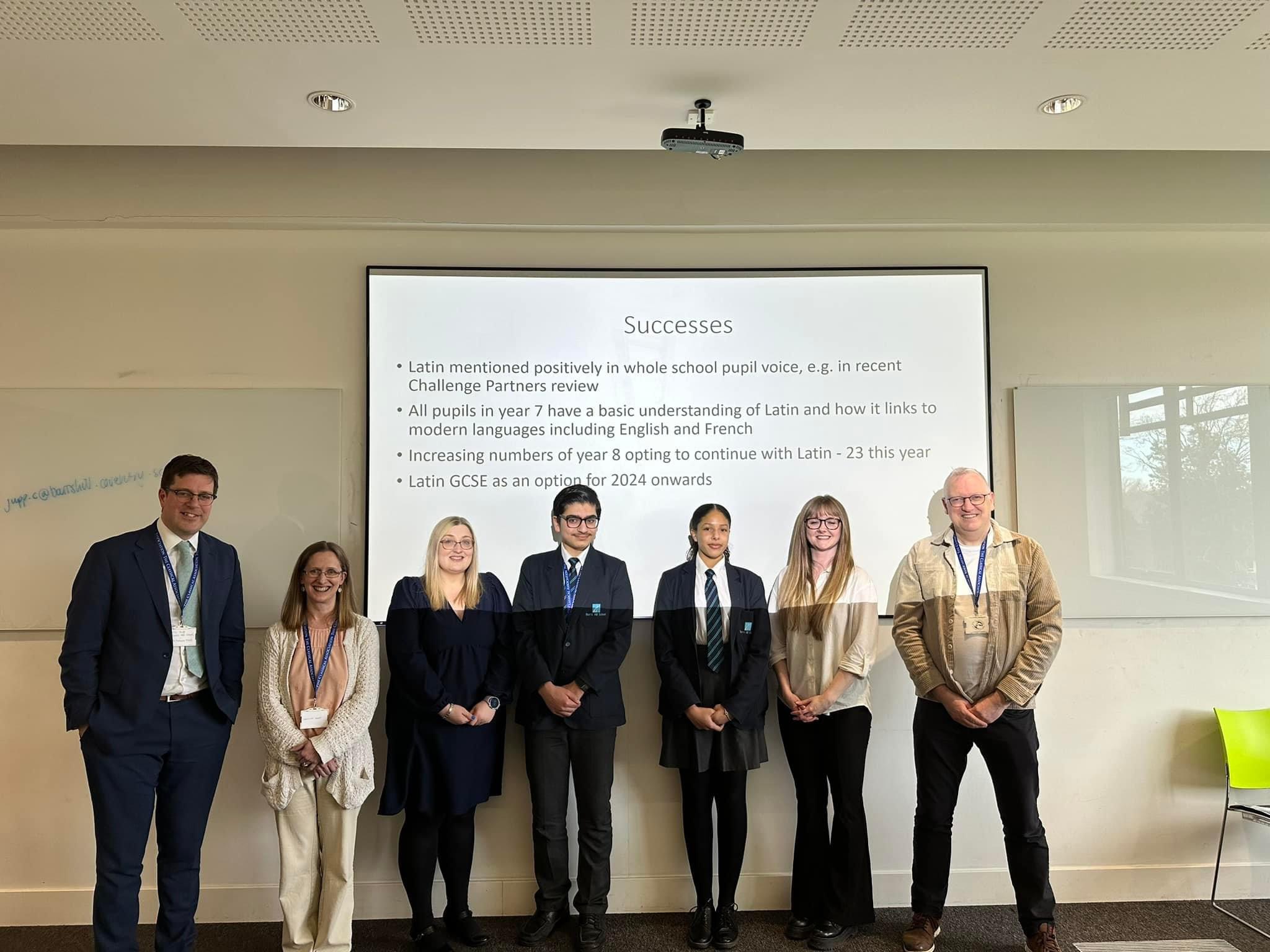
Studying ancient languages and history has given students at Barr’s Hill an opportunity to relate their own languages with a language spoken thousands of years ago. We believe all children should have access to a subject so often associated with private education and elitism. So many don’t just enjoy it but also personally relate to it; an incredibly empowering experience.
News from the classical world
A 1,900-year-old Roman grave marker has been discovered in a back garden in New Orleans. The headstone was found by a couple clearing the undergrowth who noticed a Latin inscription. After asking local professors at the University of New Orleans for a translation, it was discovered the stone was dedicated to a second-century Roman sailor and military member named Sextus Congenius Verus. This fit a description of headstone which had been missing from the city museum of Civitavecchia. The museum had almost been entirely destroyed during bombing in the second world war and was not re-opened until the 1970s.
The headstone is now in the process of being repatriated to the museum.