
Why does a teenage girl fighting for her life in a televised wilderness arena feel so familiar? Not just because Suzanne Collins's The Hunger Games (2008) became one of the most commercially successful novels of the twenty-first century, but because the tradition it draws upon is ancient. Katniss Everdeen is the latest in a lineage stretching back two thousand years - to the coerced fighter, the baying crowd, the powerful figures watching from a safe distance, and the uncomfortable question of what it says about a society that finds it entertaining. The gladiatorial arena never really went away. It simply found new settings.
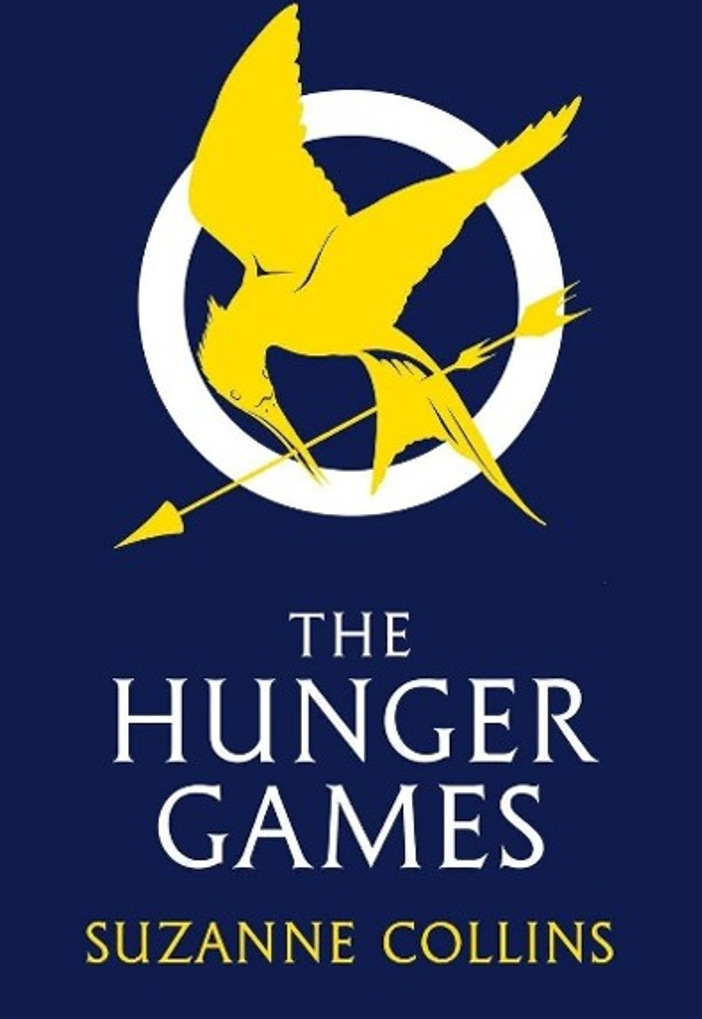
Following the publication of The Hunger Games, over fifty YA dystopian novels incorporated arena-based narratives that draw - consciously or not - on the cultural memory of Roman gladiatorial spectacle, creating a new literary trope that introduced millions of adolescent readers to classical motifs through popular culture rather than formal education. My doctoral thesis, Dystopian Spectacles: The Enduring Legacy and Reimagining of Roman Arena Narratives for Twenty-First Century Young Adult (YA) Readers, set out to explore this trope - where it comes from, how it works, and why it matters. Central to this exploration is the concept of indirect classical reception: the idea that these novels engage with classical themes and imagery without necessarily making explicit reference to their ancient origins, operating through accumulated cultural exposure rather than academic study.
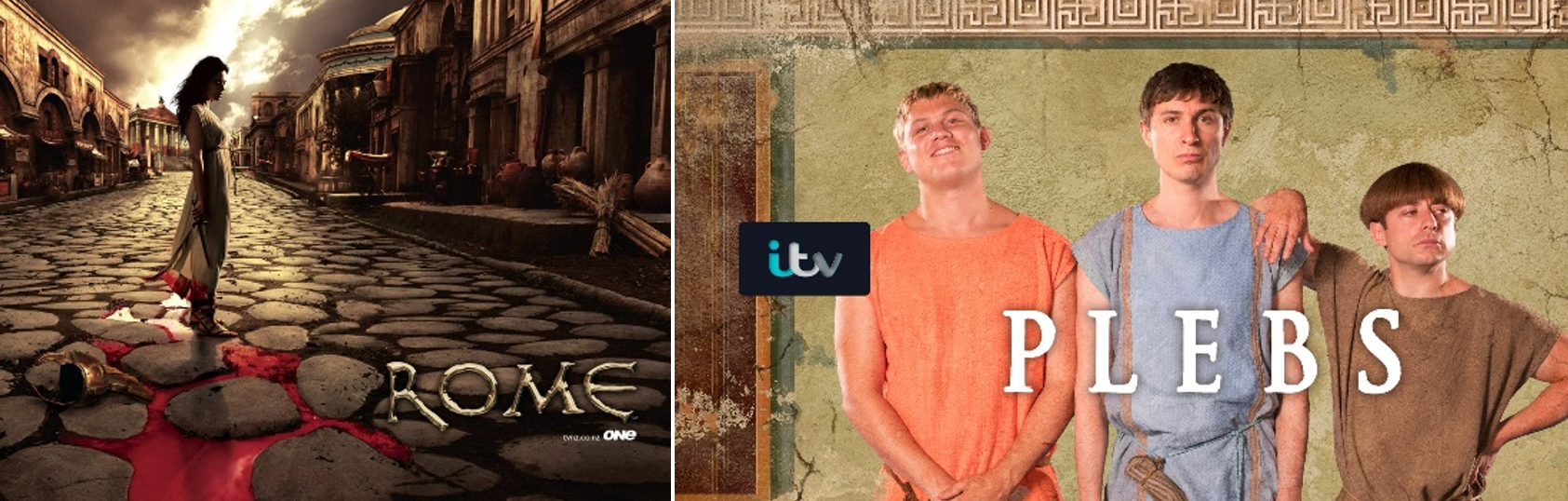
YA readers have matured in a cultural milieu where ancient themes permeate popular culture. Antiquity is encountered in both direct and indirect forms, and audiences are encouraged to view it as fluid, versatile, and open to creative reinvention. From Rick Riordan's Percy Jackson series to Madeline Miller's literary retellings, from the gritty political drama of HBO's Rome to the anarchic humour of ITV's Plebs, the ancient world has appeared in almost every conceivable register - serious and comedic, faithful and fantastical, reverent and irreverent, depicted in Latin and modern slang. For a generation raised on this plurality, the ancient world is not a fixed and distant thing to be studied but a living imaginative resource - flexible, familiar, and perpetually available for reinvention.
It is in this new era of classical reception that The Hunger Games and the trope of the YA dystopian arena emerged. Collins's trilogy drew (at least to some extent) on classical sources - the myth of Theseus and the Minotaur, Stanley Kubrick's Spartacus (1960), and extensive research into Roman gladiatorial culture - but the dozens of arena narratives that followed in its wake required no such ancient grounding. What they inherited instead was a set of five core structural elements so deeply embedded in contemporary cultural consciousness that they could be reproduced instinctively, across wildly different settings and genres, while remaining recognisably gladiatorial. Whether the narrative is set in a dystopian future America, a virtual reality gaming world, a post-nuclear wasteland, or a Britain governed by monthly televised executions, these elements recur with remarkable consistency:
-
The Gladiator: a figure forced to participate in combat against their will. While the historical male slave-gladiator is transformed into diverse protagonists of various genders, ages, and backgrounds, the fundamental condition of coerced participation in lethal spectacle is preserved.
-
The Arena: a controlled environment designed for spectacle. The physical Colosseum has evolved into diverse settings ranging from natural landscapes to virtual realities, yet these spaces maintain the essential characteristics of containment, visibility, and manipulation.
-
An Oppressive Antagonist: a power structure that enforces participation, reinterpreting the imperial authority of ancient Rome into various forms of dystopian governance and preserving the fundamental power imbalance that characterises the gladiatorial tradition.
-
Ethical and Social Degradation: a society that commodifies human life as entertainment, reflecting the persistence of ancient Roman criticisms of the arena as both symptom and cause of ethical decay, transmitted through layers of cultural adaptation rather than direct classical education.
- The Spectacle as a form of entertainment and/ or subjugation: the deliberate use of violent entertainment to maintain power, enforce compliance, or provide brutal spectacle. This element reframes Juvenal's panem et circenses (bread and circuses) critique for contemporary audiences, preserving the classical connection between public spectacle and political passivity.
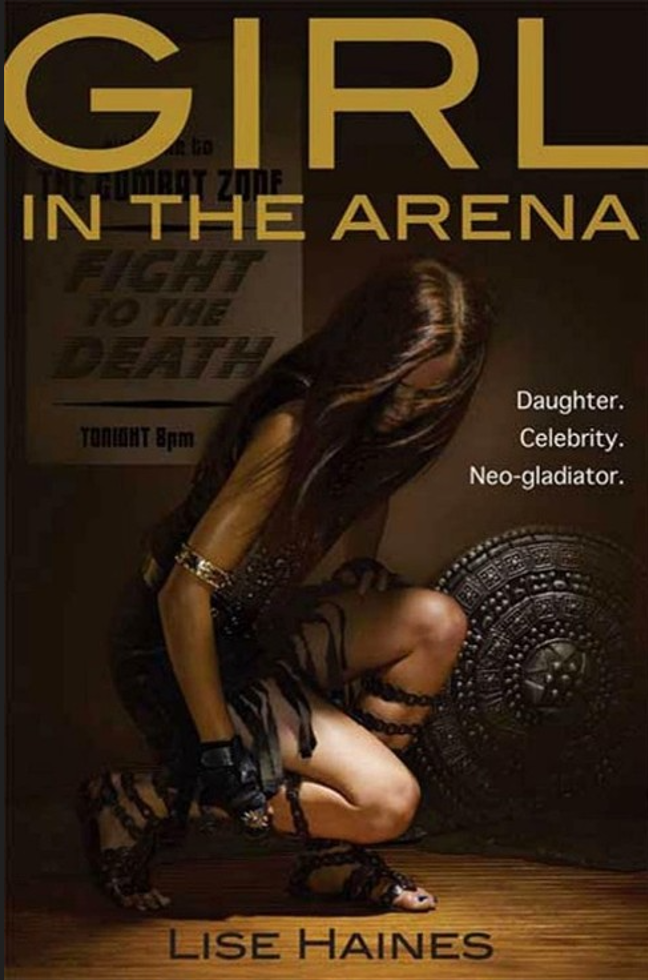
This framework is not rigid but fluid - a cultural schema that shifts and adapts across texts and genres. Not all five elements need be present for a text to evoke the arena trope, nor do all authors engage directly with Roman sources. The trope evolved significantly in the years following The Hunger Games, ranging from historically grounded texts like Lise Haines's Girl in the Arena (2009), which retains explicit gladiatorial terminology and structural links to Roman tradition, to increasingly genre-blending forms like Blake Northcott's Arena Mode (2013), which transplants gladiatorial motifs into superhero fiction, and Holly Jennings's Arena (2016), which relocates them entirely into virtual reality. What unites them is not visual or historical fidelity but narrative function - the coerced combatant, the watching crowd, the power that orchestrates it all from a safe distance. Many of these novels draw on The Hunger Games itself as their primary connection to the ancient world - a further example of indirect classical reception. The five core elements are best understood not as strict criteria but as intertextual anchors, tracing the thread that connects Panem's arenas to the Colosseum - maintaining classical connections even in highly transformed adaptations, from virtual reality gaming tournaments to labyrinthine survival trials.
One of the most compelling pieces of evidence for this indirect reception comes not from the texts themselves but from their readers. Analysis of Goodreads - the world's largest online book community with over 140 million registered users - reveals that ordinary readers instinctively recognise gladiatorial patterns in these novels without any academic prompting. A recognisable formula emerged in how readers described the arena novels that followed: the "Hunger Games meets Y" construction, in which Collins's trilogy functions as a kind of shorthand, signalling the presence of arena-based spectacle, high stakes, and deadly consequences. Goodreads reviewers describe The Maze Runner (2009) as "Hunger Games meets Lord of the Flies," Nerve (2012) as "Hunger Games meets Saw," and Arena (2016) as "The Hunger Games meets Ready Player One." While some reviewers may have been unaware of The Hunger Games' roots in Roman gladiatorial tradition, many clearly understood the connection between the ancient and modern arenas. Collins's trilogy, itself deeply informed by classical and cinematic influences, now functions as a foundational intermediary text through which many readers interpret subsequent arena narratives - carrying a two-thousand-year-old cultural grammar to readers who have never studied Rome but know an arena when they see one.
The anxieties that drive these novels are not new. From as early as the second century BCE, educated Romans expressed unease about what the growing popularity of gladiatorial combat revealed about their society. Their anxieties clustered around three concerns: that violent spectacle was displacing worthier intellectual and civic pursuits; that the emotional excess it provoked was corroding individual character; and that, in the hands of the powerful, it was becoming a tool for keeping the masses passive and politically disengaged. The charge was levelled by writers across centuries and genres: the playwright Terence, the statesman Cicero, the Stoic philosopher Seneca, the satirist Juvenal, and the historian Tacitus all, in their different ways, found the arena and its audiences wanting. Juvenal's famous phrase panem et circenses (bread and circuses) articulated the fear that a population kept fed and entertained would surrender its political agency entirely. The arena was not merely entertainment; it was the stage on which power and passivity were performed as spectacle - a dynamic that twenty-first century YA fiction has proved remarkably well-suited to reimagining.
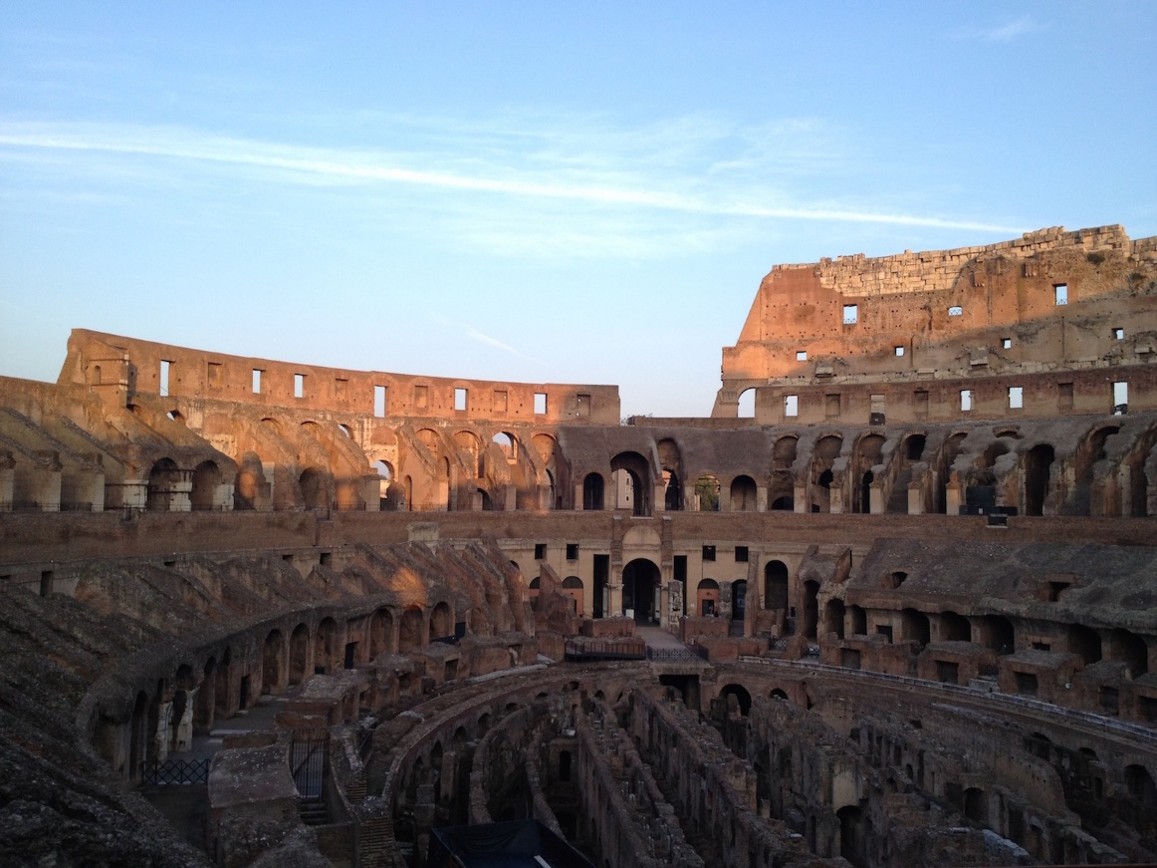
The Colosseum as it now stands
Those ancient anxieties found their most systematic modern expression in 1967, when the French theorist Guy Debord published The Society of the Spectacle, in which he argued that in modern capitalist societies, authentic social life has been replaced by its representation: we no longer live experience but watch it, and this substitution is not accidental but structural, a mechanism through which power maintains itself. It is a theory that finds a vivid fictional expression in Collins's Panem: the Hunger Games do not merely entertain, they suppress. Districts are kept materially poor and visually saturated. The tributes' deaths are not a byproduct of governance but its primary instrument - the annual reminder of absolute power, packaged and broadcast as the season's must-watch event. For Capitol citizens, the Games are a celebration; for the Districts, they are a punishment. This duality - spectacle as festivity for the powerful and terror for the powerless - is the trilogy's most direct inheritance from the Roman arena, and the template from which subsequent authors would work.
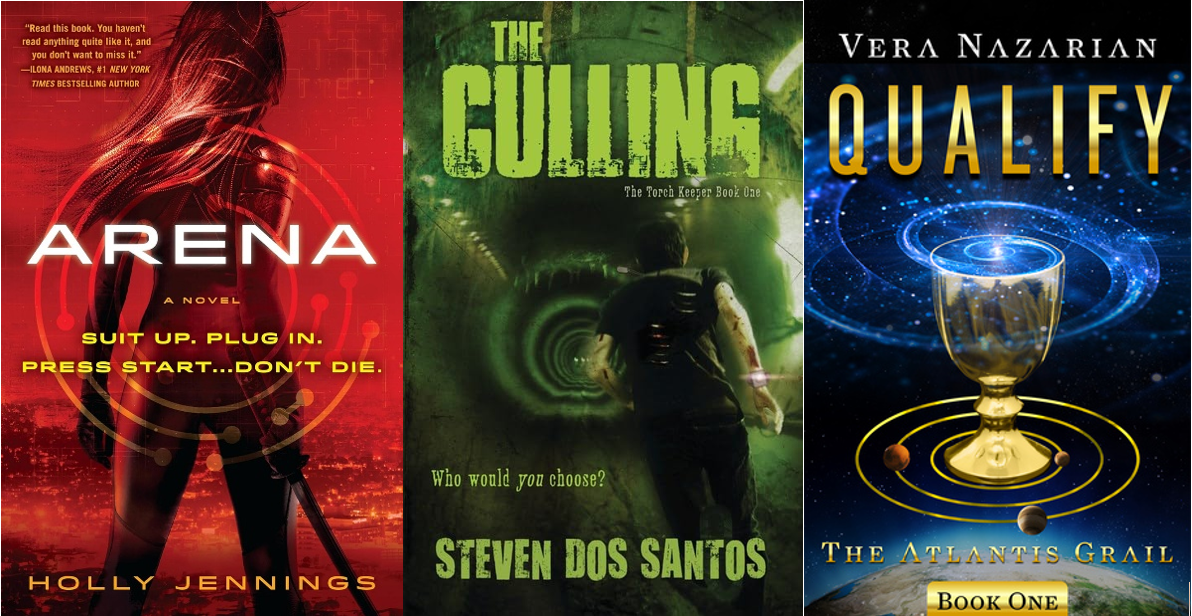
The texts that followed adapted this dual function in strikingly diverse ways. Holly Jennings's Arena (2016) presents a voluntary spectacle society, where passivity emerges not through governmental coercion but through willing immersion in commercialised entertainment - citizens of a dystopian LA consuming virtual gladiatorial combat as escapism, unable to recognise their own political disengagement. Steven Dos Santos's The Culling (2013) inverts the model entirely: here, spectacle operates through concealment rather than display, the population kept passive not by what they are shown but by what they are not - the unknown horrors of the Trials generating a fear more paralysing than any witnessed violence. Vera Nazarian's Qualify (2014) offers perhaps the most striking adaptation, where the pacifying mechanism is neither entertainment nor fear but hope - the slim possibility of survival transforming an apocalyptic selection process into a global spectacle that prevents collective action as effectively as bread and circuses ever did. Together, these texts demonstrate that the dual function of the arena - as entertainment and as control - is one of the most enduring and adaptable elements of the classical gladiatorial tradition. The mechanism changes; the function does not.
This article has touched on only a fraction of what the YA dystopian arena trope has to offer. As I explore at length in my thesis, the texts which engage with this trope yield considerably more - the spatial dynamics of arena architecture across ancient and modern settings, the commodification and eroticisation of gladiatorial bodies and their YA counterparts, and the systematic exploitation of tributes and competitors that these novels use to signal societal moral collapse. Taken together, these threads reveal a trope far richer than its surface suggests. The Roman gladiator survives not only in museums or classrooms but in the cultural imagination - in the stories we tell, the entertainment we consume, and the anxieties we reach for fiction to express. These narratives function as cultural palimpsests: texts in which ancient concerns about spectacle, power, and morality are overwritten by contemporary anxieties, yet never fully erased. They invite young readers to engage with classical traditions not as distant relics but as living frameworks through which to understand the world around them. In this new era of classical reception, the teenager emerges not only as the central figure within these stories but as their most active interpreter - reviving and reimagining Rome in ways that neither the ancients nor earlier generations of classicists could have anticipated. How the figure of the gladiator will continue to be understood, reshaped, or reclaimed in the years to come remains an open question — but one that future readers, writers, and rebels will surely answer.
Dr Hebe Barlow has loved the ancient world for as long as she can remember, from learning about Tutankhamun at primary school to devouring Asterix and Obelix comics and the Roman Mysteries series – encouraged by a history-obsessed dad. She studied Ancient History at the University of Birmingham, drawn by a course that covered Egypt and the Ancient Near East alongside Greece and Rome, before completing a Classics PGCE at the University of Sussex. She returned to Birmingham for a Masters and has been based there ever since. She recently completed a PhD in classical reception, exploring how Young Adult Dystopian fiction – from The Hunger Games onwards – has reinvented the Roman gladiator for a new generation. Her thesis shows how novels use recurring arena tropes to smuggle ancient anxieties about spectacle and power into modern stories about surveillance and oppressive rule, introducing classical themes to millions of young readers through popular fiction rather than the classroom. She now works as the West Midlands Network Coordinator for Classics for All, on a mission to introduce as many pupils as possible to the ancient world.