
Daniel Beurthe looks at Plato and Aristotle on the power of words.
‘Have you not heard that I am the son of a midwife… and that I practise the same trade?... The only difference is that… my concern is not with the body but with the soul that is experiencing birth pangs.’ (Plato, Theaetetus, 149a (tr. Harold N. Fowler, 1921)
Through this markedly visceral metaphor in Plato’s Theaetetus, Socrates introduces the now-famous aphorism of the philosopher as midwife of the soul. The rationale behind his comparison, expounded in his exchange with the eponymous interlocutor of the dialogue, is that the philosopher should seek to guide the ideas and beliefs harboured within the minds of others, developing them with delicacy, and ultimately actualising them into cogent theories and doctrines.
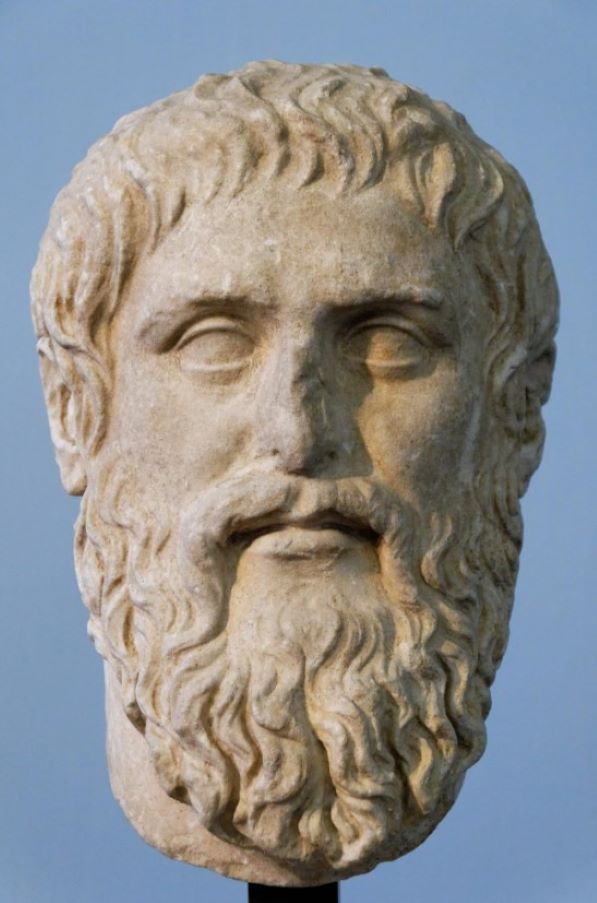
For Socrates, the business of the philosopher is that of analysis and scrutiny. He does not project or impose beliefs, but rather tests the validity of those which his ‘patients’ – to use Socrates’ own term – hold. Socrates goes on to argue that it is through this general methodology, facilitated through discourse, that the attainment of philosophical truth takes place.
It is little wonder, therefore, that Socrates should take such umbrage at the practice of rhetoric. In Plato’s Gorgias, the famed rhetorician after whom the text is named is challenged by Socrates to explain what exactly his craft entails, and what he regards the definition of rhetoric to be:
‘[Rhetoric is] a thing, Socrates, which in truth is the greatest good, and a cause not merely of freedom to mankind at large, but also of dominion to single persons in their several cities… I call it the ability to persuade with speeches either judges in the law courts or statesmen in the council-chamber or… an audience at any other meeting that may be held on public affairs. And I tell you that by virtue of this power you will have the doctor as your slave, and the trainer as your slave; your money-getter will turn out to be making money not for himself, but for another—in fact for you, who are able to speak and persuade the multitude.’ (Plato Gorgias, 452d-e (tr. W.R.M. Lamb, 1967)
Gorgias is brazenly unequivocal: rhetoric is a means of acquiring power through persuasion. And yet, even in spite of Gorgias’ megalomaniacal phrasing, Socrates discerns moral ambivalence in the act of persuading a multitude. He recognises that, in order to fully assess the ethical standing of rhetoric, he must evaluate the effect it produces on the crowd and not just the end result it achieves for the speaker. As such, Socrates proceeds to interrogate Gorgias on the nature of the persuasive force of rhetoric:
Socrates:
'Now which kind of persuasion is it that rhetoric creates… The kind from which we get belief without knowledge, or that from which we get knowledge?'
Gorgias:
'Obviously, I presume, Socrates, that from which we get belief.'
Socrates:
'Thus rhetoric, it seems, is a producer of persuasion for belief, not for instruction in the matter of right and wrong.'
Gorgias:
'Yes.' (454e-455a)
And with this, Socrates’ stance on the subject is cemented. Not only has Gorgias defined rhetoric as a means of obtaining and exerting power over others – a disconcerting proposition in itself – he has now openly admitted that it is utterly indifferent towards truth and falsehood. It is not concerned with the attainment or propagation of true knowledge, and instead seeks to instil beliefs regardless of their fundamental validity. This admission results in one of the most bitter exchanges to be found in any of Plato’s Socratic dialogues, where we see Socrates bringing the full force of his invective to bear against what he regards as an illegitimate, if not outright immoral, practice:
‘the art of flattery… pretends to be that into which she has crept, and cares nothing for what is the best, but dangles what is most pleasant for the moment as a bait for folly, and deceives it into thinking that she is of the highest value. Flattery is what I call it, and I say that this sort of thing is a disgrace… because it aims at the pleasant and ignores the best.’ (464c-465a)
Socrates issues this denunciation in the middle of a powerful diatribe in which he asserts that rhetoric is to philosophy what cosmetics and cookery are to gymnastics and medicine; medicine and gymnastics being geared towards the actual health of the body, whilst cookery and cosmetics merely provide a pretence or an impersonation of care.
Socrates’ treatment of the aims and the consequences of rhetoric are resolute; responding to Gorgias’ definition of the practice as that which seeks to persuade an audience of a given position not because it is fundamentally right or true, but because it is in the orator’s best interest, Socrates’ polemic leaves little room for objection or repudiation.
He is equally damning in his condemnation of the means used to achieve these ends (even if his presentation of this is admittedly rather oblique):
‘For indeed, if the soul were not in command of the body, but the latter had charge of itself, and so cookery and medicine were not surveyed and distinguished by the soul, but the body itself were the judge, forming its own estimate of them by the gratifications they gave it… everything would be jumbled together, without distinction as between medicinal and healthful and tasty concoctions.’ (465c-d)
Here, Socrates picks up his analogy of cookery and medicine, and uses it to draw a distinction between the rational faculties of the soul and the emotional ones of the body. His argument asserts that rhetoric engages the emotions, and uses these to incite the will of listeners into action, whilst dismissing and ignoring the mind and intellect. His reflection that this leads to “everything [being] jumbled together” is a clear indictment of these purely emotive appeals, and a warning of the consequences which ensue when rhetoricians employ them.
However, on surveying Plato’s canon of Socratic dialogues more broadly, something of an inconsistency in Socrates’ position begins to emerge.
This is most evident in the Phaedrus, where Socrates concludes a lengthy admonition of rhetoric by asking his interlocutor what the personification of the 'art of speaking well' herself would make of their discussion:
'Well, do you think we have reproached the art of speaking too harshly? Perhaps she might say: ‘Why do you talk such nonsense, you strange men? I do not compel anyone to learn to speak without knowing the truth, but if my advice is of any value, he learns that first and then acquires me. So what I claim is this, that Without my help the knowledge of the truth does not give the art (τέχνη) of persuasion.’ (Plato, Phaedrus, 260d (tr. Harold N. Fowler, 1925))
The description of rhetoric in this passage as an art – or techne – in itself constitutes a step change in Socrates’ attitude towards the practice which was displayed in the Gorgias. Classifying an activity as an art was an acknowledgement of its worth and value. This is in contrast with the far less prestigious, even derogatory description of rhetoric as an empeiria – or ‘knack’ – given in the Gorgias. The final line of the anthropomorphised Rhetoric’s speech touches upon the reason for this acclaim: without the art of speaking well, truth itself would carry no persuasive force. However, Socrates is quick to qualify this:
'...if the arguments that are coming against her testify that she is an art. For I seem, as it were, to hear some arguments approaching and protesting that she is lying and is not an art, but a craft devoid of art. A real art of speaking, says the Laconian, which does not seize hold of truth, does not exist and never will.' (Phaedrus 260e)
When questioned on what these arguments are by Phaedrus, Socrates himself answers with a question; one which seems to cast rhetoric in a more favourable light:
Is not rhetoric in its entire nature an art which leads the soul by means of words…?' (261a)
When looked at in isolation, Socrates’ positions on rhetoric in the Gorgias and the Phaedrus both appear to be resolute, and his arguments for each are convincing; in the former text, rhetoric is a means of control which often relies on purely emotive appeals to accomplish the will of the orator, regardless of the ethical validity of his ends or the degree of truth in his words. In the latter, rhetoric is an art through which listeners can be led to real philosophical truth.
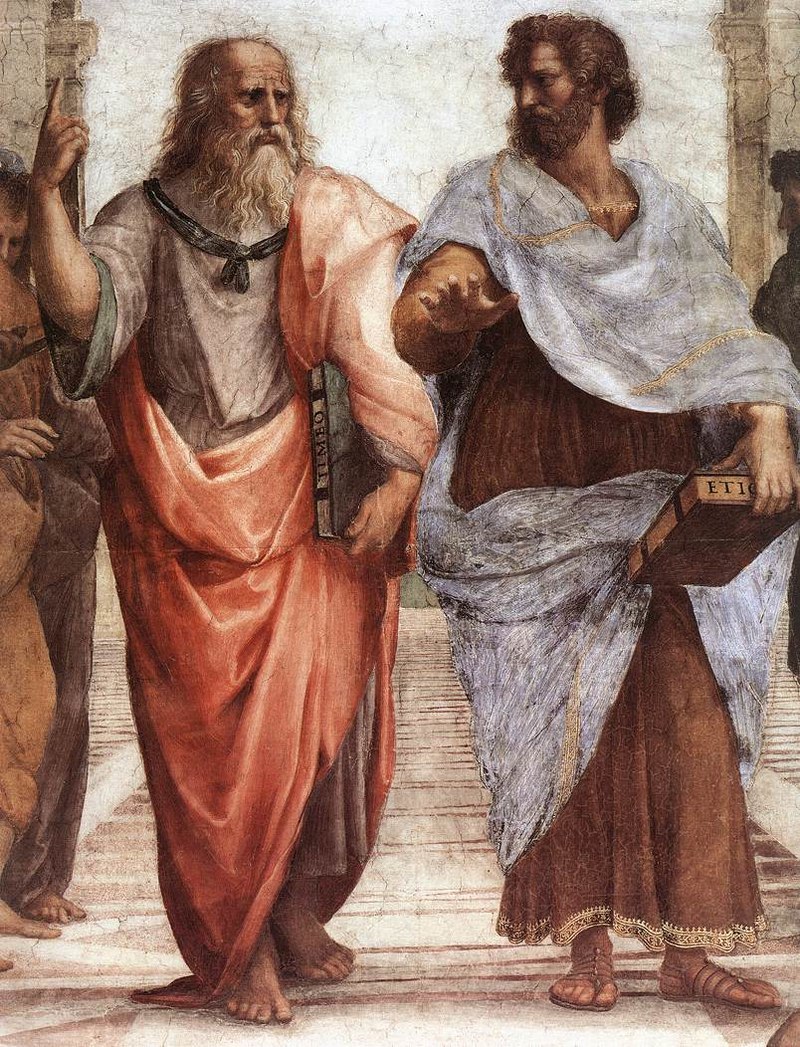
To shed light on Socrates’ position, and perhaps reconcile the seemingly disparate stances on display in Plato’s differing texts, a brief survey of the unifying and harmonising force of Plato’s student, Aristotle, would be in order. As is so often the case, Aristotle identifies and picks out the golden threads of Socrates’ arguments, scattered across the wide textual and temporal corpus of Plato’s works, and weaves them together into a cogent, consistent tapestry.
In his seminal treatise on the topic, The Art of Rhetoric, Aristotle gets underway with an incisive definition, declaring rhetoric to be ‘a counterpart of Dialectic’ (Aristotle, The Art of Rhetoric, 1.1 (tr. H.C. Lawson-Tancred, 1991)); both are types of discourse between and amongst people, with the latter art being a form of argument through conversation necessarily concerned with discovering objective truth, and the former being argument through speeches concerned with the persuasion of an audience towards a given position.
Aristotle then goes on to develop this definition of rhetoric, stating that under all circumstances it must hold the truth at its very core, and only seek to persuade an audience of a given position if that position is grounded in objective, demonstrable proof. Indeed, Aristotle posits truth to be so integral to rhetoric, that he goes so far as to repudiate the most commonly held belief of the function of rhetoric:
'It is also clear that [rhetoric’s] function is not persuasion. It is rather the detection of the persuasive aspects of each matter.’ (1.1.14)
Rhetoric, Aristotle argues, is not persuasion for the sake of persuasion, and the rhetorician cannot contrive the persuasive elements of his argument; rather, the persuasiveness must be intrinsic to the position being put forward. For there to be persuasiveness in a position, and for this to be able to persuade through the logical proofs of 'induction and the real and apparent syllogism,' (1.2.8) the proposition must be true. Otherwise, neither an abstract syllogism, nor a concrete inductive example, would be able to stand.
So adamant is he that rhetoric be grounded in truth that he begins his examination of the mechanics of different forms of rhetorical address with summaries of the core principles of his foremost philosophical treatises; the Politics and Nicomachean Ethics: if a rhetorical speech is not aligned with the tenets of these, and therefore doesn’t espouse the objective truths which Aristotle argues for within them, then according to The Philosopher it is fundamentally illegitimate.
One glaring question emerges from the arguments Aristotle has been making on the nature of rhetoric thus far: if truth and the presentation of proof is so integral to the art of rhetoric, why use rhetoric at all to persuade, and not just logical arguments? If the formal and ornamental structures of speech are so subsidiary, and logic so fundamental, why should the orator go to the trouble of dressing the latter up at all, diluting its force and cogency in the process, and not just address his audience in a series of uninterrupted deductive or demonstrative statements?
Again, Aristotle deals with this contention by picking up the thread of argument woven by Socrates in his dialogue with Phaedrus, and develops an incipient idea into a sound and insightful explanation—Socrates’ notion that rhetoric is effective at bringing about changes in the soul.
In the second chapter of his treatise, when dissecting the characteristics of rhetoric, Aristotle turns his gaze on the general nature of the audiences to whom rhetorical addresses are made, stating that:
'The function of Rhetoric, then, is to deal with things… in the presence of such hearers as are unable to take a general view of many stages, or to follow a lengthy chain of argument.' (1.2.12)
The ambiguity in the text here should be noted: it is uncertain if the incapacities of the audience are due to practical or intellectual issues (i.e., whether they are unable to follow lengthy arguments because of factors such as time constraints, or because of intellectual deficiencies). It could also be the case that the ambiguity was deliberate, and Aristotle was succinctly covering both bases; arguing that rhetoric is expedient both in situations when an audience does not have time to listen to an extended chain of reasoning, and equally when they do not have the intellectual capacity to do so.
Were he to have intended the latter, the exclusionary nature of his sentiment is tempered earlier in the text, when he states (1.1.14) that 'in rhetoric there will be the orator by understanding and the orator by choice,' thereby making it clear that rhetoric is within everyone’s reach. It can be learnt and understood by anyone who makes the conscious choice to do so, not just by those born with the innate ability to grasp its essence intuitively. This holds true not just for orators, but also for listeners; through rhetoric, audiences uninitiated in the field of philosophy would still be able to be persuaded towards an idea or a course of action, even if the logical and philosophical grounding of it is beyond their reach.
However, in Aristotle’s justifications for the need for rhetoric, more fundamental than the argument from expedience is the argument he gives from necessity; for Aristotle, the art of rhetoric – that is, the art of identifying and presenting the persuasiveness intrinsic to a given position – is necessary as a defence against sophistry and purely emotive, voluntarist appeals.
'We need the capacity to urge contradictory positions… not so that we may adopt either of the two (it is quite wrong to persuade men towards evil), but so that we should be aware how the case stands and be able, if our adversary deploys his arguments unjustly, to refute them… And even as someone who misuses this sort of verbal capacity might do the greatest possible damage, this is a problem common to all good things except virtue and applies particularly to the most advantageous, such as strength, health, wealth and strategic expertise – if one used these well one might do the greatest possible good and if badly the greatest possible harm.’ (1.1.12-13)
This theme of being on guard, as it were, against the specious perversions of rhetoric to which the art is susceptible is ever present in Aristotle’s treatise. It is constantly in the background, informing and shaping not just his arguments but the very structure of the text itself: when Aristotle does eventually come to deal with the techniques of adorning and embellishing a speech, he navigates his exposition with pragmatism, and confers a clear ancillary status to the cosmetic components of rhetoric. He reinforces this point structurally, deigning to delve into the decorative only after he has comprehensively laid out his treatise on demonstrable proofs.
Aristotle equips us with the tools needed both to partake in the art of rhetoric legitimately and virtuously, and also to judge those practitioners of the craft with rational and measured assessment. If there is one overarching imperative to take away from The Art of Rhetoric, therefore, it is not how to persuade; it is, rather, to beware of persuasion. To proceed with caution when participating in that practice, either as speaker or as listener.
Indeed, returning to the metaphor of the midwife, Socrates himself highlights the vital importance of the judicious scrutiny of ideas and arguments:
'So great, then, is the importance of midwives; but their function is less important than mine. For women do not, like my patients, bring forth at one time real children and at another mere images which it is difficult to distinguish from the real. For if they did, the greatest and noblest part of the work of the midwives would be in distinguishing between the real and the false. Do you not think so?' (Plato, Theaetetus, 150a-b)
Aristotle’s masterpiece on the art of rhetoric shows us how, through operating in the realm of rationality and intellect, and being vigilant against perversions of these faculties, we too may become that rare breed lauded by his predecessor, the midwife of the soul, who 'tries by every test to decide whether the offspring of a young man’s thought is a false phantom, or is something imbued with life and reason.' (Plato Theaetetus 150c)
Daniel Beurthe is an author, communications specialist, human rights advocate and classicist. He has held roles in UK Parliament, an international PR agency, and the derivatives trading desk of an investment bank. He recently received an advanced exit on his stake in a communications consultancy he set up in 2020, during the Covid pandemic. Since then he has written his debut work of narrative non-fiction, which is due to go to print in summer 2024 following an acquisition from a large publishing house. He currently spends his days engaged in public and parliamentary affairs for a human rights charity, writing freelance news and features articles, and planning his breakout work of fiction. Bylines Daniel has received in the not-too-distant past can be found in the likes of The Sunday Times, The Times, The Daily Mail, Private Eye, and a host of financial outlets such as Investing.com. He is a graduate in Classics from the University of Bristol.
DISCLAIMER: the views expressed in these articles are solely those of the author(s) and do not necessarily reflect the views of Classics for All.