
In December 2021, the Classical Association and Classics for All surveyed teachers nationwide to build a clearer picture of the state of Classics in schools and the experiences of those teaching it. The findings prompted the Classical Association’s Teaching Board (CATB) - made up of teachers, examiners, subject representatives and academics - to launch a review of the English classical qualifications in preparation for the next round of exam reform. The aim was, and still is, to ensure that the subject community is ready for change and that teachers’ voices are central to the process.
Recognising that this work could not fall solely on the existing subject representatives, the CATB established new Subject Advisory Teams for Ancient History, Classical Civilisation and Classical Languages. These teams bring together experienced practitioners from a wide range of educational settings, including the tertiary sector, and from across the country, ensuring the review is informed by diverse perspectives and classroom expertise.
Where to start with a review?
The Subject Teams, who meet termly, began by reflecting on what currently works well within the qualifications and where improvements - or, in some cases, complete overhauls - might be needed. To ensure teachers could meaningfully shape this process, the CATB developed a set of subject‑specific surveys. These were carefully designed to be clear, concise and neutral, while still capturing the insight needed to guide reform. Released in stages across 2024 and early 2025, the surveys aimed to build a comprehensive picture of how teachers felt about both GCSE and A Level qualifications and to help identify clear priorities for development. But the consultation didn’t end there: we have continued gathering feedback through one‑to‑one discussions with schools, workshops at CPD events, and presentations at cluster meetings. These conversations have not only broadened participation but also strengthened awareness of the CATB’s review work across the community.
We were delighted to receive nearly 500 responses across the three surveys, giving both the CATB and the Subject Advisory Teams confidence in the direction of their work and the priorities for redevelopment across the subject areas.
A change of government
At a similar time to the CA’s own review of classical qualifications, the new Labour government tasked Professor Becky Francis CBE with chairing a panel of experts to conduct a major review of the curriculum and assessment system in England, covering primary through to 16-19 education. Using the feedback we had received from the teaching community via our surveys, the CA, in collaboration with the All-Party Parliamentary Group for Classics (for which the CA acts as secretariat), wrote an open letter to the review panel setting out our recommendations for classical subjects in this review.
In November 2025, the final report of the Curriculum and Assessment Review was released, along with the government’s response. The Classical Association issued a response; whilst it was pleasing to see that a number of our recommendations had been addressed in the final report, there were areas where we would seek further clarity - not least as there was very limited reference to classical subjects in the report, and we wanted to ensure that children and young people could continue to access the classical world.
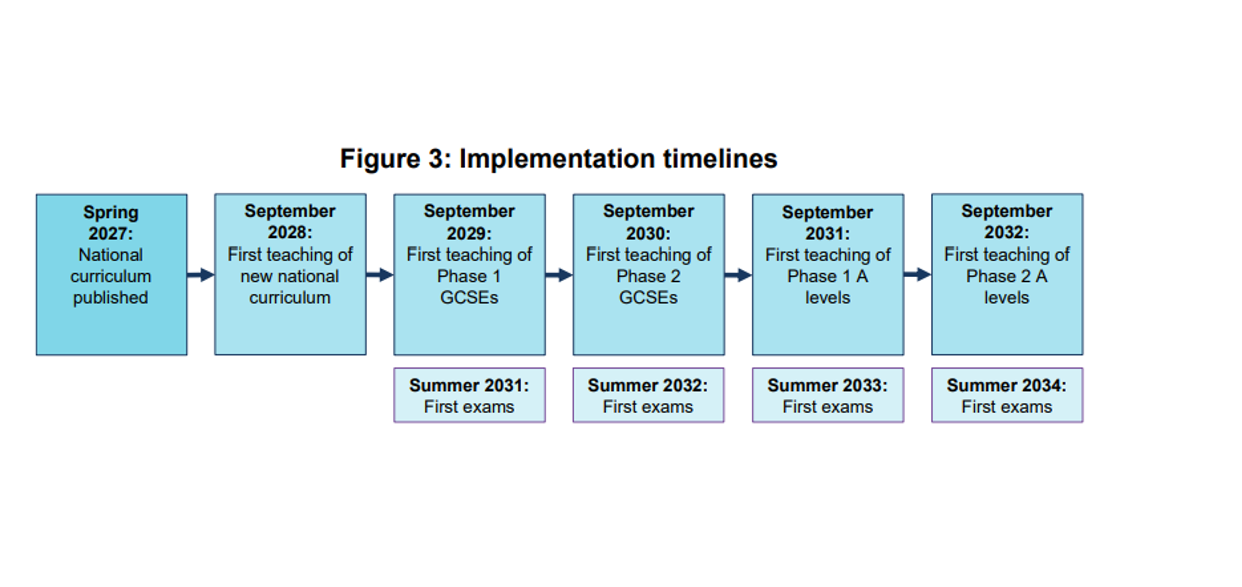
The government’s response to the Curriculum and Assessment Review outlined their revised implementation timelines for qualification reform; a staggered approach over a number of years means the current GCSE and A Level specifications will be taught for a while yet, and a potential change of government before the end of this timeline adds a layer of uncertainty to this process.
What are the priorities for reform?
With a government-led reform now further away than initially anticipated, the CATB and the Subject Advisory Teams are looking at a two-pronged approach to reform. Conversations with the DfE to represent the teaching community as they prepare for reform will be ongoing, and proposals for future specifications will remain in development. But we are also working closely with the exam boards to consider where revisions could be made to the current specifications to alleviate some of the pressures teachers and students are facing in the classroom now.
Classical languages
GCSE Latin is generally well regarded by teachers, and the frameworks of both the Cambridge OCR and Eduqas specifications are easy to digest, though many would welcome improvements to the assessment models, including greater consideration given by the exam boards to the content of the unseens selected for translation, which overwhelmingly focus on military or political themes, or are adaptations of myths where women and girls rarely have their own autonomous voices. For long term reform, the Subject Team is exploring the balance between the amount of prose and verse studied, how visual culture could be incorporated into the study of literature (the thematic model including visual material developed by Eduqas has been well received), and how much of a set text could or should be studied in translation.
GCSE Greek, however, isn’t so well received. Its more exacting grammatical expectations, the additional challenge of learning a new alphabet, and the limited teaching time many centres have available, have led to strong calls for a substantial reduction in the linguistic demands of the qualification, and the Subject Team is working closely with Cambridge OCR to see whether this could happen sooner rather than later.
At A Level, whilst teachers are satisfied with the existing linguistic content, there is a clear desire for changes to the assessment, and the Subject Team is exploring the idea of a Defined Vocabulary List, a wider variety of question types, and papers with graduated levels of difficulty. The team is also discussing how to shift the study of literature away from intensive close analysis towards broader thematic approaches that offer richer insight. But there’s one very clear demand from those teaching the Cambridge OCR literature at both key stages: a lengthening of the set text cycle!
Ancient History
The feedback we have received from the Ancient History teaching community revealed a strong consensus across both key stages. At GCSE, teachers unanimously support replacing the Foundations of Rome module, and the introduction of an optional New Kingdom Egypt period study. Whilst the Cleopatra and Alexander depth studies are hugely popular with teachers and students alike, introducing a depth study on Pompeii and Herculaneum is seen as both feasible and exciting. The Subject Team, with teacher workload and examiner capacity at forefront of mind, agreed that introducing New Kingdom Egypt should be the main change for the next reform point, while continuing to strengthen and diversify the Greek and Roman offer.
The A Level specification currently feels narrower than the GCSE, and could be diversified by broadening the Greek period study to focus on Athenian society and culture, which would create space for a new depth study. The Subject Team is also considering improvements to how source material is managed. Long term, the aim is to have a better balance of literary and material culture sources, and there may be an opportunity to refresh elements of the current source lists before the next reform point. The aspiration is to have all resources freely available online, and to ensure a greater diversity of people and places within our source lists.
Classical Civilisation
There is a strong desire from teachers of GCSE Classical Civilisation to overhaul the current specification and assessment model. Hearing the feedback of teachers, the Subject Team has developed a single compulsory thematic study exploring the Trojan War in art and literature, using a source-based approach; teachers of Classical Civilisation very much enjoy teaching Homer, Virgil and myth, and have demonstrated a clear preference for studying literature in its ancient context. Work is now underway to develop optional modules (both literature and material culture) to sit alongside this thematic study. The team is exploring ways in which the format of the current assessment could be altered during this current specification cycle to alleviate some of the concerns teachers have raised about the GCSE examinations.
At A Level, whilst teachers are broadly satisfied with the current specification, there is a strong consensus that we need to revise how secondary scholarship is managed within the assessment—the Subject Team is currently exploring whether an interpretation style question as used in Ancient History would be an appropriate fit here. Similarly to Ancient History, teachers of Classical Civilisation at both Key Stage 4 & 5 expressed a desire for a more diverse range of voices to be included in future specifications.
Next steps for CATB
The CATB and Subject Advisory Teams will continue to work closely with the exam boards, representing the concerns of the classics teaching community and working collaboratively to improve the teaching and assessment of our subjects both in the short and long term.
We will continue to develop our relationship with the DfE, to ensure that classical subjects remain a part of the conversation as the department prepares for reform.
The Classical Association, as the subject association for the discipline and the secretariat for the All-Party Parliamentary Group for Classics will continue to act as a clear voice for change.
Gráinne Cassidy ([email protected]) is the Education Co-ordinator for the Classical Association, where she is leading a major review of the English school qualifications, developing the CA's work as the UK Subject Association for Classics, and organising CPD opportunities for teachers. Alongside this role, Gráinne provides the secretariat for the All-Party Parliamentary Group for Classics and sits on the Board of Directors for the Council for Subject Associations.