
OUP (2026) 354pp h/b £16.99 (ISBN 9780197924488)
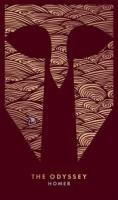
As I write, translations of the second Homeric epic are flying off the shelves in the wake of Christopher Nolan’s film The Odyssey. A quick search suggests the reader has at least fifteen modern versions to choose from. This one (first published in 2016) appears now in a reasonably priced hardback form, with an attractive cover design combining an Homeric helmet and a ship at sea. It forms part of an eclectic list of two dozen ‘World’s Classics’ titles reissued in this format, alongside the same translator’s Iliad and works by authors ranging from Jane Austen and Dostoevsky to Gilbert White and M.R. James.
I can claim the entirely vicarious distinction of having worked for two headmasters who have published translations of both Homeric epics: Martin Hammond (Iliad Penguin 1987, Odyssey Duckworth 2000) and Anthony Verity (Iliad 2011 and this Odyssey, both OUP). Hammond’s translations are in prose, Verity’s in a sort of informal verse which, whilst eschewing any claim to be ‘poetic’, sticks closely to the line numbers of the Greek.
It would be invidious to adjudicate, but the works of both translators use a straightforward English register, replicate the Greek faithfully, and achieve an understated elegance. Both are ‘traditional’ in contrast to the currently popular versions by Emily Wilson which introduce contemporary idioms to deliberately striking and even jarring effect. In the perpetually vexed matter of rendering Greek names, Hammond uses close transliteration (Aias and Kronos) whilst Verity has the more familiar Latinised forms (Ajax and Cronus). Both tick all four of Matthew Arnold’s boxes in On translating Homer (1861), being ‘rapid, plain, direct, and noble’.
The explanatory matter provided by William Allen serves Verity’s Odyssey very well. A brisk seventeen-page Introduction describes ‘song-paths’ in the world of itinerant oral bards. Homer’s self-effacement is seen as the obverse of an aspiration to universal appeal. Hospitality and recognition are shown as intertwined central themes. The energy and power of Homeric heroism in its various forms could produce instability and danger, but the Odyssey consistently condemns arrogance and cruelty, and the hero’s return restabilises Ithaca. The epic has a sophisticated awareness of itself as poetic fiction, and we share Athena’s enjoyment of the hero’s Cretan tales. As in the Iliad, there is a skilful handling of narrative time, so that the events of a few weeks encompass vastly more. Allen also provides end matter, with a useful precis of each of the twenty-four books, and individual notes on mythological characters, place names and customs. Finally, there is a detailed index of personal names.
Extracts from famous passages give a flavour of Verity’s translation. First, the blinded Cyclops Polyphemus, feeling the back of the ram that has Odysseus clinging underneath:
‘My favourite ram! Why are you the last of my flocks to
leave the cave? Never in the past have you lagged behind
the others, but were easily the first to stride boldly off to feed
on tender shoots of grass … Can you be grieving for
your master’s eye, that a cowardly man and his vile friends
have robbed of its sight, after fuddling my wits with wine?
I mean No-man, who I declare has not yet escaped ruin.’
(Book 9, ll. 447-55)
Next, the moment in the hut of the swineherd Eumaeus, when Telemachus addresses the old beggar whose appearance Athena has just transformed:
‘You are changed, I see, guest, from just a moment ago:
your clothes are different, and your skin is no longer the same;
surely you must be one of the gods who dwell in the broad sky.
Be gracious, I beg, and we will bring you sacrificial offerings
to please you, and finely wrought gifts of gold; only spare us!’
At this much-enduring noble Odysseus addressed him:
‘No, I am not a god. Why do you liken me to the immortals?
I am your father, the man for whose sake you grieve and suffer
so many miseries, patiently bearing the violence of other men.’
So he spoke, and kissed his son, and tears ran down his cheeks
to the ground; before this, he had resolutely held them back.
(Book 16, ll. 181-91)
And finally, the restrained emotion of the scene where the young Phaeacian princess says goodbye to the man she might have married if things had been different:
‘Now Nausicaa, whose beauty came from the gods,
was standing by a pillar supporting the strongly built roof,
filling her eyes with wonder at the sight of Odysseus.
Speaking with winged words she addressed him: ‘Fare well,
guest! And when you are in your own land think of me
sometimes, for to me first you owe the debt of your life.’
(Book 8, lines 457-62)
John Taylor