
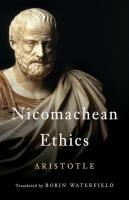
Basic Books (New York 2026) p/b 342pp £28 (ISBN 13:9781541604872)
Aristotle was born fifteen years after the execution of Socrates. In his late teens he enrolled as a student at Plato’s Academy. Plato had been a student or a disciple of Socrates. Over time Plato and Aristotle became firm friends, although they disagreed on some major issues.
Aristotle built upon the work of his two great predecessors, to become the greatest polymath of the ancient world. The surviving writings of Aristotle span formal logic (of which he was the founder), astronomy, natural sciences, biology, psychology, metaphysics, philosophy and politics. Aristotle studied almost every aspect of the world around him. He applied his immense analytical powers to every subject in a broadly similar fashion. His surviving writings are the product of a lifetime’s work. Most take the form of lecture notes. Since Aristotle’s ideas developed over time, his works do not represent an entirely coherent view of all topics.
Aristotle’s works on ethics, politics and social issues comprise Politics, Rhetoric, Nicomachean Ethics (NE) and Eudemian Ethics. These are fragmented and compressed. They are sometimes inconsistent. The whole of this corpus was probably written piecemeal as lecture notes, which Aristotle revised and expanded over the years. NE is the most important of those works. It spans 298 pages in this translation.
This reviewer would summarise the work as follows. Political theory or political science is not a precise science like mathematics. Its aim is to achieve the maximum happiness for citizens. People’s views differ as to what constitutes happiness. Since men are sociable by nature, they seek happiness not just for themselves, but also for their friends and family. People need a modicum of material goods, in order to live. However, human excellence and nobility are more important. The greatest happiness is activity of the soul, namely pure contemplation.
Every virtue and excellence is a mean, which lies between two extremes. But this does not mean that every goal should be a compromise. Liberality lies between miserliness and excessive spending. Good temper lies between irascibility and excessive placidity. Truthfulness lies between boasting and false modesty. Friendliness lies between (a) being obsequious or flattering and (b) being quarrelsome or rude. Courage lies between cowardice and recklessness. Temperance is a mean in one’s attitude to pleasures. As discussed below, justice is also a mean.
Legislators endeavour to make citizens act well. Good constitutions achieve this more effectively than bad ones. So a proper education is important for all citizens. Also, the laws impose punishments as a form of cure for unacceptable behaviour. For the purpose of awarding honours or imposing punishments the law must distinguish between voluntary and involuntary actions. Ignorance may make an act involuntary, but not self-induced ignorance such as drunkenness.
Aristotle next discusses the nature of mind and the intellectual virtues at some length. This part of his writings has less to offer the modern reader. However, Aristotle makes the interesting observation that while a young man may become expert at geometry or mathematics, he cannot be ϕρόνιμος. That, broadly, means possessing practical or political wisdom. This kind of wisdom requires experience of life, which can only be gained over time. Aristotle would not approve of the twenty-something MPs who are now getting elected to Wesminster!
Aristotle then turns to the nature of friendship and the duties placed upon friends in the different forms of relationship. The good man does acts for the benefit of his friends or his country. If necessary, he will die for them. The possession of friends is a necessary ingredient of happiness. Those friends must be virtuous.
Aristotle’s famous theory of justice is contained in NE book 5. His argument runs as follows. First, there is justice in the general sense. ‘Justice’ generally refers to a state of mind, which causes people to do what is just and to desire what is just. ‘Injustice’ is the opposite. A just person abides by the law. He is also equal (ἴσος) in his conduct. He is not grasping or overly concerned with material goods.
Laws are framed for the benefit of the community, alternatively some part of it. So one meaning of ‘just’ is that which enhances the happiness of the community or parts of it. Hence the law requires citizens to be courageous in warfare, and to refrain from adultery, assaults, libel and similar injurious conduct. ‘Justice’ in the wide sense means moral excellence in one’s dealings with other people. It encompasses, but is not limited to, obeying the law.
In addition to its general meaning (moral excellence) justice also has more specific meanings. There is (a) distributive justice and (b) corrective justice. This foundational distinction between the two forms of justice was an original idea of Aristotle.
Distributive justice involves the fair distribution of material goods within the community. Between people who are equal, that means equal shares. In other circumstances merit is relevant. Distributive justice requires that the apportionment should be proportionate. Distributive justice requires that both the benefits and the burdens should be shared out amongst all members of society in a proportionate manner. It is unjust if one person takes more than his proper share of the benefits or bears less than his proper share of the burdens. Aristotle’s concept of distributive justice roughly corresponds with the modern concept of social justice.
Corrective justice involves correcting what has gone wrong in private transactions. Such transactions may be voluntary ones between individuals, such as sales, purchases, loans or lettings. Alternatively, the transactions may be criminal acts, such as theft, enticement of slaves, assault or murder. It is the function of corrective justice to make good the damage which has been done. The judge imposes a penalty upon the wrongdoer, in order to restore the pre-existing equality between the parties. In the eyes of corrective justice, all men are equals. It makes no difference whether a bad man has wronged a good man, or a good man has wronged a bad man.
We now come back to the mean. Justice is something more than mere reciprocity. Justice, like all virtues in Aristotle’s scheme of things, is a mean. Corrective justice seeks the mean between the loss suffered by the victim and the gain made by the wrongdoer. In distributive justice, the proportionate share of benefits and burdens which each person receives is a mean between the two possible extremes. Each of the two possible extremes (too much and too little) represents an injustice.
Turning from Aristotle’s magisterial work to this book, it must be said that Robin Waterfield has done the ancient philosopher a great service. The translation is clear, readable and (on the basis of some spot checks) accurate. Many of the concepts which Aristotle discusses are complex. Mr Waterfield expresses them in simple user-friendly English.
John Sellars’ introduction provides a brief account of Aristotle’s life and career, as well as a summary of NE. Again, this is well written and clear. NE is packed with so much important material, often laconically expressed, that no two scholars summarising the work will alight upon the same elements. Mr Sellars’ summary is somewhat different from this reviewer’s summary (set out above), but it is none the worse for that. Mr Sellars’ notes at the end are concise and helpful. He has resisted the temptation to discuss every mortal point.
The overall result of Messrs Waterfield’s and Sellars’ efforts is a first-class presentation of a major philosophical work from the ancient world for the benefit of modern readers. It has much to offer, both for classicists and others with a serious interest in philosophy.
Rupert Jackson