
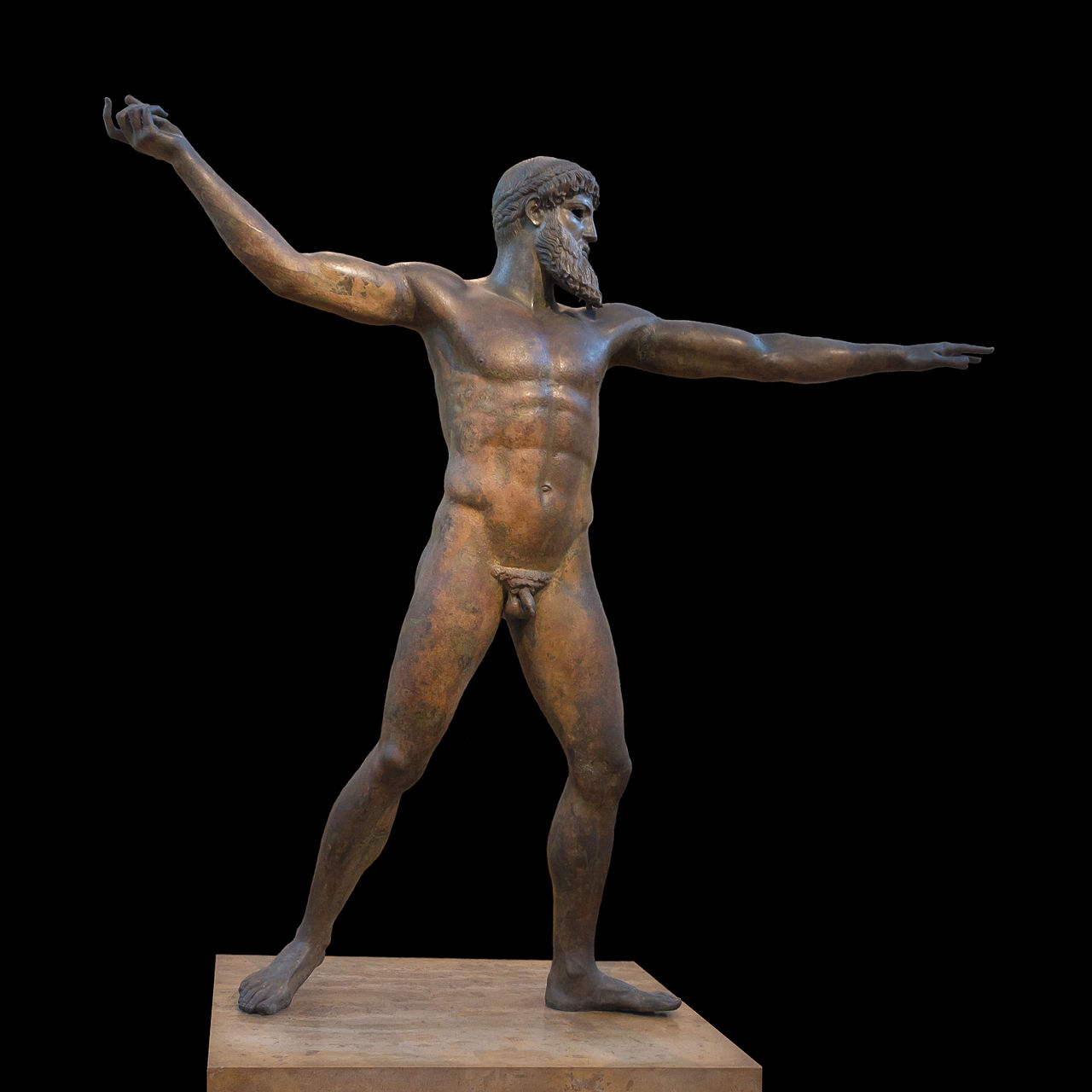
My first fond memory of classics comes from a high school art class. We were studying art history, a field where Greek and Roman art is pretty much unavoidable. The Artemision Bronze, more commonly known as Zeus/Poseidon, was our subject that day. We were shown photos of this statue from different angles, and when one of us commented how the statue’s craftmanship was shown in its immaculate curves of muscles, the class became silent, because we were all looking at something. Our art teacher realised this, and with a serious face, she pointed out how Zeus/Poseidon does, indeed, have an exceptional posterior. The class descended into chaos at this, and it took a while for us to calm down.
Although the memory stays with me even now, back then, I had no idea what classics was. As a subject, classics’ presence in South Africa is weak to say the least. One of our best universities, Wits, offers no classics, and it is usually not included in our secondary education syllabus. In fact, if it weren’t for my English teacher who told me about classics, I probably would have chosen English Literature, or a different humanities subject, for my BA.
This should not come as surprising, as the study of classics is often seen as the study of the roots of the West, and anyone with an inkling of South African history knows the country’s painful and still fresh memory of Apartheid, a most ignominious product of Western civilisation. (For an interesting and short read on South Africa and classics, see Patrick Cook’s article here.) As such, it goes without saying that, with such a complex history and environment, pursuing classical studies in South Africa is a pretty unique experience.
I did not appreciate it enough back then, but looking back, the first course I did for classics at Rhodes University was a particularly striking approach to classics. Together with David van Schoor, who now teaches at Emory University, we read Guns, Germs, and Steel by Jared Diamond. Public opinions differ greatly on this book, but for me, it demonstrates that there are no better or worse cultures, and no culture or civilisation should be placed on a pedestal. Thereafter, we were taught the Mali Epic of Sundiata by the department head Daniel Malamis, dabbled in basic Chinese philosophy with Marius Vermaak from the philosophy department, and even read a South African translation of Homer’s Odyssey by Richard Whitaker.
Collectively, my undergrad classics experience in Rhodes was rather inclusive and intercultural – it exposed me to an array of ancient civilisations, all presented on the same footing, which I think echoes congruously with the history of South Africa. It is because of this that even now, I tend to think of classics as 'the study of ancient civilisations', instead of just 'about the Greeks and Romans'.

Academics aside, I think the physical experience of studying in South Africa also had an impact on my views of classics. The time I spent at Rhodes University, Grahamstown, was unfortunately backdropped by draught and load shedding (routine blackouts to ease the pressure on the energy system). This led to days where I lived with no running water or electricity, and sometimes both. Being occasionally cut off from the ease of modern society certainly gave me a newfound understanding of some parts of classics – because I assure you, when you can’t shower or flush the public toilet for three days straight, you will sympathise greatly with the Herald in Aeschylus’ Agamemnon, who gives a most pitiful description of the soldiers’ suffering in the Trojan War. Couple this with how small Rhodes’ classics department is – there were times when I got to decide my own exam dates, because I was the only student – I was faced with the fact that there are indeed a lot of people whose life has no space for classics, and it has consistently made me assess the true meaning of pursuing classics.
Why would one want to read Homer when their basic necessities are not even met? Why did I stick with classics, when my experience could have very well persuaded me to study something that could produce more tangible benefits for society?
These are big questions that I’m not able to answer at the moment, and I may never be able to give a complete answer to them. Perhaps you have thoughts you could share? I do, however, appreciate the singular experience that inspired my questions, and I have no doubt that the influence of my experience in South Africa will stay with me for a long time, as I continue on my path as a classicist.
Clare Chang is studying for a master's in Classics at King's College, London and sits on the student-led steering committee for The Chorus. She likes to read ancient literature and enjoys drawing comparisons between ancient texts. If you have any questions for Clare, or thoughts about her article, you can tweet her @cyyclare.